A Japanese Ministry of Health, Labour and Welfare panel met on May 25 to begin discussions regarding lifting the ban on medical cannabis to benefit patients who suffer from refractory epilepsy.
As reported by The Asahi Shimbun, the ministry may revise the current law sometime this summer. Japanese law currently prohibits any possession or cultivation of any part of cannabis, including “the spikes, leaves, roots and ungrown stalk of the cannabis plant.”
The Asahi Shimbun references that of the “Group of Seven,” or the seven countries with the most advanced economies, which includes Canada, France, Germany, Italy, Japan, the United Kingdom, and the United States. Of these, Japan currently has one of the strictest approaches to cannabis regulation and prohibition. In August 2021, the Japanese ministry wrote a report that recommended that the government should consider following the example of other countries to allow patients to use medical cannabis.
While the ministry is discussing the addition of a provision to the Cannabis Control Law that would exclude medical cannabis consumption from becoming grounds for punishment, the agency also seeks to further criminalize recreational use.
Although cannabis is illegal, there are some Japanese cannabis cultivators who are licensed to produce hemp to create shimenawa, a specific rope that is commonly used at shrines. There are no punishments for these cultivators, for fear that the production of the ropes may include “unintentionally inhaling substances of marijuana.” However, this assumption was disproven when no farmers’s urine tests came back positive for cannabis in a survey conducted in 2019.
The Asahi Shimbun writes that some experts believe the law should provide treatment options for “those addicted to marijuana to prevent repeat offenses,” which mainly includes Japanese youth.
In December 2021, Japanese gaming company Capcom allowed the use of its Ace Attorney character to curb cannabis consumption in the nation’s youth, in conjunction with the Osaka Prefectural Police (OPP). Previously, Capcom has assisted the OPP with other crime prevention campaigns. “Capcom hopes to support crime prevention activities in Osaka and all of Japan through this program, which will see the production of 6,000 original posters, as well as 4,000 original flyers that will be included with individually wrapped face masks,” the company said in a press release.
Japan has long prohibited cannabis under the Cannabis Control Law that originally went into effect in 1948. Historically, cannabis had its place in Japanese culture and religion, but from the 1950s onward, Japanese law on cannabis mirrored that of the United State’s approach to prohibition. The Japanese hemp industry was still permitted to operate, but due to expensive cultivation licenses and a decline in demand for hemp goods, few farms remain.
While the government perspective is beginning to shift, it is still clear that Japan needs more progress before it can fully embrace cannabis legalization. In 1980, former Beatles band member Paul McCartney visited Japan with less than eight ounces in his possession, which netted him an 11-year ban from returning. In February 2022, a U.S. Marine received two years of hard labor for mail-ordering “a half-gallon of weed-infused liquid and the quarter-pound of cannabis” from an unnamed individual in Nevada. On May 17, a school nurse was imprisoned for allegedly possessing “an unspecified amount of dried cannabis in two jars and a plastic bag.”
Dog, we gotta stop complaining about the price of good weed. It’s killing the value we hold for a plant that was never meant to be cheap. People have dedicated their lives to making sure the world has this medicine. But seeing $3 1g joints and $15 eighths the first time we walked into a dispensary warped shoppers’ minds into thinking the legal industry was here to give us the world’s best cannabis for a couple pennies and a compliment. We developed an entitlement to low prices, versus an appreciation for high quality. Now, as a result, the OG growers that truly know how to produce that top tier stick ‘n stank are being forced to compete in a race to the bottom with corporations that put out some of the most regular degular, cardboard-tasting, no terps, no punch, having ass weed ever.
It’s ugly, bro. And every time we complain about price, it negates all of the blood, sweat, tears, labor, overhead costs, etc. that went into us even having the choice between some $50/8th super fire and some $20/8th Dirt McGirt.
Why weed is so expensive
It’s not free to grow weed. It’s not free to sell weed. Companies aren’t trying to fuck us; they’re trying to survive. We only assume the former because most people have absolutely no clue how many bases our purchases of high-priced weed have to cover.
There are so many entities that have to eat off of the weed we buy. You’ve got the growers themselves, you’ve got the distros that buy from growers then sell to dispensaries, you’ve got the dispensaries that sell the products to you. All throughout those processes you have overhead costs for producing, manufacturing, processing, packaging, testing, transporting, and selling those products. And along every step of the journey, Big Government is hitting companies over the head with an extreme amount of taxes that leaves most companies in the red before they even get a chance to pay all of these costs. Our purchases quite literally are keeping the lights on for most companies, and that’s very important to know so that we can understand that even with the costs we pay for a bag of green goodness, the costs were still much higher for the people that created it for us.
“Most farmers are selling their 8ths for $12, and the farmer, depending on their break-even point, might take home $3.50, maybe,” says Johnny Casali, owner and operator of Huckleberry Hills Farms, when asked about the costs of doing weed business.
What we used to pay for weed
We’ve forgotten what life before legalization was like. We’ve forgotten that before you could toss on a Nutella-stained hoodie and run out to a dispensary at 10:43pm to grab a fresh bag of Lemon Cherry OG Kush Gelato Mints #18, you had to blow up a stranger’s phone like a crazy ex-partner until they finally hit you with a “Come thru” 8 hours after the fact. And you did. You did come through. Because you knew if you didn’t right then, your next day would hold the exact same Mission of the Weedless. We’ve forgotten what it was like to meet up at 7-Eleven for a half-ripped grocery bag of What The Fuck Is This from Who The Fuck Knows because your optionless ass was at the mercy of whatever the dealer brought that day. And most importantly, we’ve forgotten that we were always paying $35-$60 just to take these gambles. Our optionless asses always forked up the dough then, so why are we tripping now?
Legalization never promised that it would change the price of the brick, it just promised that you could cop without going to prison. Along with it came the beauties of choice and convenience. That’s what we’re paying for everytime we come out of pocket for some Insane OG.
What we’re paying for now
Freedom, quality, and history. That’s what you’re paying for now when you buy some dank ass weed for a high price. You’re paying for the freedom to buy great weed without getting your face slammed into the pavement, and you’re paying for all of the years of everyday practice it took these expert growers to learn the craft.
Do you know how hard it is to raise a single cannabis plant from seed to sexy? Incredibly. I’m growing plants at home right now and them lil’ babies are looking mad ugly, lemme tell ya. The prices we pay for the good shit is much more than just an exchange of goods, it’s a gesture of appreciation for all of the time it took growers to develop the expertise that has given us all this life-changing medicine. And we’re paying for all of the history that comes with it. Behind some of these big name companies are some legacy growers that built the modern day industry on the foundation of illegal trap shit. Growers who were hiding out in the hills of the Emerald Triangle from helicopters; growers in SoCal that were moving house-to-house creating the art of indoor cultivation; growers that were creating this industry long before the Chads and Tylers even knew weed existed. For all of that risk, time, and expertise, don’t these brands deserve to set an adequate price for high levels of quality?
Pro athletes get veteran-minimum salaries after years of performing at a high level; shouldn’t pro weed growers too?
The state of the cannabis industry
Everybody’s broke, bro. So is the system. Between the endless surplus of cheap dirt weed, the low wholesale prices of cannabis, and the extremely predatory taxes, a lot of your favorite cannabis companies are disappearing simply by getting priced out of the market. It allows some distros to muscle growers into selling for bottom dollar, because at the end of the day, what choice do they have? Make $0 then have to destroy all your old, unsold weed ain’t the answer.
Then you’ve got the lack of education in the industry about what exactly defines good weed. Currently, there are no true scales of quality that force weed buyers (and the market, for that matter) to acknowledge the difference between dirt and delight. Everything moves around low cost and bullshit THC percentages, because the average cannabis consumer doesn’t disregard price, and instead prioritize how your weed is grown, who grew it, how it smells, how it tastes, how the complete experience feels, etc. Higher quality will always come with a higher cost. Additionally, a lot of uneducated consumers still believe that outdoor weed sucks (big false), so you’ve got an entire world of weed that is being disregarded before it even gets the chance to shine. Now, you have some of the best weed ever, that once used to sell for $1,500-$2,000 a pound, selling for $300-$600 a pound. In the end, it’s really fucking up the diversity in the product market, because the brands that should be getting the most money to produce the best products are often the ones on the verge of extinction.
“A lot of us aren’t getting rich, we’re just trying to stay afloat and keep a job at the end of the day,” says Jason Gelleman, owner and operator of Ridgeline Farms, when asked about the costs and profits of growing good weed.
Support the brands that care about you
Weed is medicine. That’s all it ever was, that’s all it ever will be. There is no such thing as recreational cannabis. With that knowledge, you should always prioritize putting the best quality of medicine in your body. It’s like choosing organic over GMO foods, the Whole Foods salad bar over Arby’s. Yeah, that Arby’s is cheap as fuck and technically counts as food, but the experience of eating it will leave you feeling like absolute garbage, both mentally and physically. The same standards of quality should hold true for cannabis. The world’s best weed is always going to come from companies that prioritize quality and consumer health over quantity and product sales. Right now, between the state of the industry, the lack of education, and the government’s extremely unjust taxation, shit is looking like only the latter types will survive.
As consumers become more educated on why the difference between high quality craft cannabis and low quality garbage is well worth their money, hopefully the market will correct itself. But by that time, will the best growers and brands still be around? Not if we keep expecting to get filet mignon weed for sirloin tip prices. Not if the government doesn’t get its shit together.
Regulators in Oregon have released the first round of rules governing the state’s new voter-approved psilocybin therapy program.
The rules, released last week by the Oregon Health Authority, detail various manufacturing requirements and safety procedures, as well as the permissible types of psilocybin products.
According to The Oregonian, those are “just the first set of rules for a program set to go into effect in January 2023,” while “rest of the rules will be considered in the fall and adopted by Dec. 31.”
Oregon Psilocybin Services, a division within the Oregon Health Authority Public Health Division’s Center for Health Protection charged with implementing the new law, provide some context on the new rules in a letter to the public last week.
The agency said that it “received approximately 200 written and verbal comments during the public comment period that took place April 1-22, 2022 and relied on these comments to further refine the final rules.”
“In some cases, public comments were incorporated in the adopted rules and in others they were not. OPS weighed competing priorities and viewpoints that were received throughout the rulemaking process when making revisions, while considering equity, public health and safety,” the letter said. “In addition, OPS considered the statutory authority of the Oregon Psilocybin Services Act and the scope of current rulemaking. OPS received numerous comments that may be relevant to future rulemakings but were not related to the content of the proposed rules in this subset of rules. It is important to note that this letter does not address every change to the draft rules. Instead, it responds to the most frequent themes observed from the public comment period.”
Chief among the newly unveiled rules was the decision to allow manufacturers to cultivate one type of mushroom: Psilocybe Cubensis.
“OPS received comments requesting that the rules allow additional species of mushrooms and use of additional substrates. The Oregon Psilocybin Advisory Board recommended limiting cultivation to Psilocybe Cubensis and prohibiting substrates that may pose a risk to health and safety. To avoid the risk associated with deadly, poisonous look-alikes and the potential for wood lover’s paralysis and animal-borne pathogens, OPS has upheld this recommendation in final rules. That said, although raw manure is prohibited, finished compost is allowed. OPS looks forward to consideration of additional species in the future through continued dialog with the public and recommendations from the Oregon Psilocybin Advisory Board,” the letter said.
The successful passage of the proposal was widely hailed as a major breakthrough for the drug reform movement.
“Today’s victory is a landmark declaration that the time has come to stop criminalizing people for drug use,” said Kassandra Frederique of the Drug Policy Alliance, one of the groups that pushed for Ballot Measure 110. “Measure 110 is arguably the biggest blow to the war on drugs to date. It shifts the focus where it belongs—on people and public health—and removes one of the most common justifications for law enforcement to harass, arrest, prosecute, incarcerate, and deport people. As we saw with the domino effect of marijuana legalization, we expect this victory to inspire other states to enact their own drug decriminalization policies that prioritize health over punishment.”
“While drug decriminalization cannot fully repair our broken and oppressive criminal legal system or the harms of an unregulated drug market, shifting from absolute prohibition to drug decriminalization is a monumental step forward in this fight,” Frederique continued. “It clears the path toward treating drug use as a health issue, restores individual liberty, removes one of the biggest underpinnings for police abuse, and substantially reduces government waste.”
It was all supposed to be so easy. The national strategy for the commercialization of the South African cannabis industry was published last year. This February, the president of South Africa, Cyril Ramaphosa said in his state of the nation address that development of the hemp and cannabis sector was a major priority for the country because of the economic engine it represents—including creating an estimated 130,000 new jobs.
According to Ramaphosa, “We are streamlining the regulatory processes so the hemp and cannabis sector can thrive like it is in other countries such as Lesotho,” he said. “Our people in the Eastern Cape, KwaZulu-Natal and elsewhere are ready to farm with this age-old commodity and bring it to market.”
Imagine if President Joe Biden said the same thing?
However, all is not clear sailing.
Politicians vs. the People
The Cannabis for Private Purposes Bill, the current pending legislation at issue, resulted from a 2018 Constitutional Court ruling, decriminalizing cannabis for private use and cultivation in “private spaces.”
The bill is intended to create the blueprint for the industry.
This starts with existing entities like the cannabis clubs, which have essentially been left in limbo.
But the critics do not stop here. Most recently, they include Cosatu, the country’s largest union. They say that the bill is contradictory—and further raised doubts as to the government’s commitment to full reform. Namely, while the legislation delineates how cannabis can be produced for personal use and how it can be used for medical purposes, it is not clear how the commercialization of the industry will proceed. And even more importantly, who will be allowed to participate in it.
As Cosatu noted, this will send confusing signals to both producers and law enforcement agencies.
Beyond this, the Umzimvubu Farmers Support Network (or UFSN) which represents traditional farmers and cannabis growing communities in the Pondoland (a large segment of the south-eastern coast of the country which is bordered by Lesotho) is also being vocally critical of the legislation.
Their biggest concern? Apart from feeling ignored by decision-makers, they feel that the vague definitions in the bill are being disregarded by the government. According to them, “It remains abundantly clear that the Bill does not, even in the slightest, make provision for the centuries old custom of cannabis use and cultivation by the beneficiaries of the UFSN—the same farmers that our Honourable President Ramaphosa specifically mentioned in his most recent State of the Union Address.”
UFSN members have been frequently raided by the police in the last couple of years.
The USFN believes that the current legislation is “lip service” to the idea of cannabis reform that will benefit Indigenous farmers rather than foreign and corporate interests.
They have now been joined in their opposition to the current provisions in the bill by the Rastafarian community.
The Fight Over Formalizationin South Africa
This is not a new issue, no matter the specifics at stake in South Africa. It is actually going on all over the world right now as the legalization movement begins to be formalized into regulations. Those who are crafting the legislation are not those who are most familiar with the dynamics of the legacy industry or connected to it in any tangible way. Nor do they appear to care about the associated issues that come with that.
For example, in California, legacy growers believe they are being left out of an industry which has evolved because of them.
In Canada, the discussion is now, perennially, how to limit patient home grow.
In Germany, the discussion about domestic cultivation was so fraught that patients, who initially won the right to grow their own, even if via special license from the government, lost the same as the Bundestag decided to only allow certified companies (and only from Canada) to participate in the cultivation tender in 2017.
The reality is that cannabis legalization may sound great, but increasingly, the road to legislating that legality is fraught with such clashes.
The questions around who may or may not legally cultivate and sell the plant start with a certification process that is capital intensive—and leaves out precisely the smaller cultivators who stand to benefit the most from full and final reform.
So far, these issues have not really been answered, yet, in any jurisdiction. This is also likely to be hard fought, and emotionally fraught territory just about everywhere. In this sense, the cannabis industry, so far at least, is not just like any other commodity, and it is likely to stay that way for some time to come.
New Jersey state officials announced this week that purchases of recreational cannabis hit $24 million in the first month of sales, despite only a dozen stores being licensed to sell adult-use cannabis. The New Jersey Cannabis Regulatory Commission, the state’s marijuana regulatory agency, also revealed on Tuesday that six more dispensaries will be authorized to sell recreational cannabis soon, increasing the number of retailers statewide by half.
“It’s really only a beginning, and I think it shows that there’s a lot of growth left in this market,” said Jeff Brown, the commission’s executive director.
New Jersey voters approved a referendum to legalize recreational cannabis in 2020, and state lawmakers approved legislation to regulate the state’s adult-use market in August 2021. On April 11, the commission announced that it had authorized seven companies to begin sales of recreational pot at a total of 13 dispensaries. On April 21, sales began at 12 of the locations, with the last launching adult-use cannabis about two weeks later.
At a meeting of the commission on Tuesday, officials said that the first month’s sales total of $24 million will surely increase as more licensed businesses begin operations.
“We do anticipate that this will ramp particularly as new dispensaries are approved, new cultivators are approved, and a lot of the conditional applicants that we have approved are able to come back and convert to annual licenses and begin operating,” Brown said.
Retail Pot Market Just Getting Started
Sharon Ali, Mid-Atlantic regional general manager at multi-state cannabis cultivator and retailer Acreage Holdings, agreed that New Jersey’s legal recreational weed market is just getting started.
“With only twelve operational adult-use dispensaries open, New Jersey has already seen $24 million in sales—a strong indicator of incredible potential as more adult-use retailers are approved,” Ali wrote in an email to High Times. “At the current rate of adult-use demand, we project to almost double our store traffic per month.”
Considering that New Jersey adult-use sales are projected to reach $2.4 billion by 2026, we know that this is only the beginning,” Ali continued. “To accommodate this increase in foot traffic, The Botanist in Williamstown and Egg Harbor Township have both proactively hired talent and anticipate increasing staff by 25%. We are excited to see labor and economic opportunities take off in New Jersey as we enter a new era of cannabis legalization.”
Jane Technologies, a cannabis e-commerce platform, reported that cannabis flower generated 49% of New Jersey’s recreational pot sales between April 21 and May 21, while 10% of sales were rung up for pre-rolled joints. On the day of launch, adult-use cannabis accounted for 86% of the state’s total pot sales, with only 14% going to medicinal cannabis.
Cannabis market data analyst Headset reported that based on the first week of sales in the Garden State and data from other states, New Jersey’s total annual cannabis market size is estimated to be worth between $1.3 billion and $2.9 billion.
New Dispensary Licenses Approvedin New Jersey
The Cannabis Control Commission also reported on Tuesday that it had approved new licenses for cannabis businesses, including authorization for six dispensaries to begin sales of recreational weed soon. Regulators issued approval for three stores to be operated by Ayr Wellness, and one each for Ascend and TerrAscend.
“We are thrilled to be approved for adult-use sales in New Jersey and to have all three dispensaries cleared simultaneously to open for adult-use,” Jonathan Sandelman, founder and CEO of Ayr, said in a statement from the company. “To date, Central Jersey has the lowest number of dispensaries per capita, leaving its population under-served compared with the rest of the state. New Jersey is expected to become a highly influential state for the U.S. cannabis industry, and we are honored to help shape the market landscape from its early stages.”
The commission also approved licenses for 46 smaller cannabis cultivators, retailers, and manufacturers, bringing the total of such enterprises approved by New Jersey regulators in recent months to 148. Most of the businesses, however, will take up to a year or more to begin operations.
Remember when the only compound we associated with the hemp plant was cannabidiol (CBD)? While CBD remains a mainstay of countless people’s daily routines, the industry has evolved exponentially in the last several years, and the result has been a market and brands such as Binoid that now offers a wide array of cannabinoids that are both federally legal and rich in must-try properties, with many of them being delightfully psychoactive.
Binoid is one of the best brands in the new Delta 8 cannabinoid space. Make sure to check them out and use our code HIGHTIMES25for 25% off your order and fast, free shipping to the entire United States. Now, let’s shed light on some of these newer cannabinoids and what they can offer.
Courtesy of Binoid
Where do all of These Awesomely New Cannabinoids Keep Coming From?
We have a tendency to forget that there are, in fact, well over 100 individual cannabinoids found in any given sample of hemp. The majority of these cannabinoids are classified as minor, meaning that they exist in such trace levels that they seemingly have little impact on the plant’s properties and characteristics as a whole. But, to gloss over them would be a mistake, especially since we now have the technology to isolate and analyze them more thoroughly than ever before.
It’s because of today’s top brands such as Binoid as well as analysis methods, which largely revolve around liquid chromatography, that we’re able to both examine cannabinoids more effectively, and discover ones that up until now, we never knew existed. Pair that with the high demand for psychoactive hemp compounds that happen to be protected by federal law, and you can understand why we’re seeing one new cannabinoid enter the market after another.
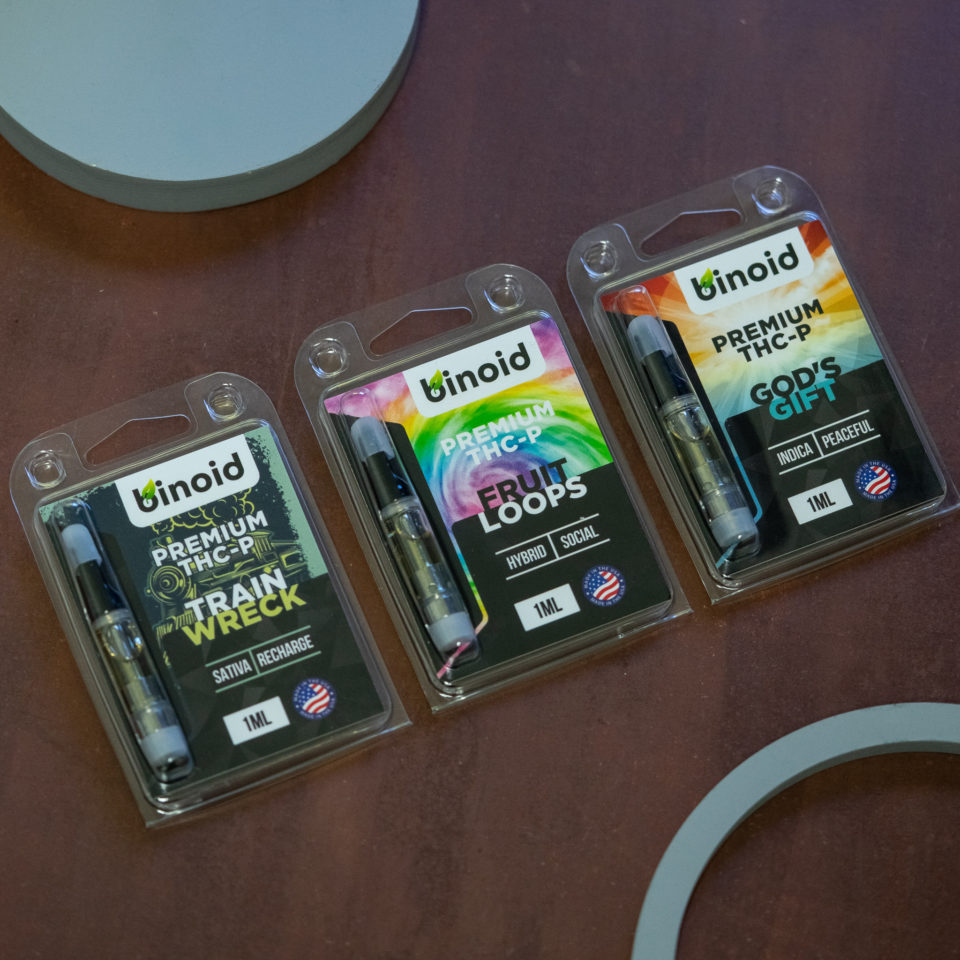
Premium Hemp brands such as Binoid are known for having a large selection of cannabinoids such as Delta 8/10, Delta 9, HHC, HHC-O, THC-O, THC-P, and more! In fact, Binoid is one of the best brands to try these new compounds because of their amazing product selection, over 15,000 five star reviews, great customer service with 24/7 phone, email, and chat support as well as low prices on products and bundles. Binoid carries vape cartridges, gummies, tinctures, wax dabs, softgel capsules, and more that their loyal customers love.
HHC (Hexahydrocannabinol) is one of those more recent discoveries, found in the pollen and seeds of the hemp plant. It’s a hydrogenated cannabinoid that’s phenomenally stable, but what hemp enthusiasts find more exciting is the fact that it behaves as almost a mirror image of delta 9 because of striking similarities in its chemical structure.
HHC is a psychoactive cannabinoid that many say is just a little milder than delta 9 in terms of its high, and it seems to offer all of the other effects that we associate with delta 9 which have to do with nausea, mood, physical discomfort, appetite, and the like.
To make HHC a little more potent to better match the psychoactive nature of delta 9, it can be combined with acetic anhydride, a reagent that can reconfigure the cannabinoid’s structure to enhance, in this case, the cannabinoid’s intoxicating qualities and create HHC-O (HHC-O-Acetate). HHC-O products are about 1.5 times more intoxicating than HHC, which doesn’t sound like much, but it in fact noticeably improves the high for more customer satisfaction. HHC-O is thought to be the closest you can get to real Delta 9 THC.
THC-O (THC-O acetate) is one of the better-known newer cannabinoids on the market, but in reality, it’s not actually new at all. Developed by the military in the mid-20th century, it was the original compound to be produced by combining a naturally occurring cannabinoid—in this case, THC—with acetic anhydride. THC-O products are three times as intoxicating as regular old delta 9, and that’s pretty potent, to say the least. Its high is extremely euphoric, and many say that the body high is out of this world. THC-O is known as the “psychedelic cannabinoid,” and its effects usually take 30 to 45 minutes to kick in.
If you thought THC-O was a powerful psychoactive, wait until you get your hands on THC-P (tetrahydrocannabiphorol). This is a naturally occurring cannabinoid found in extremely trace amounts in the hemp plant—so trace that it was only discovered a little over two years ago thanks to more advanced analysis methods. THC-P products are about 10 times as psychoactive as delta 9 THC, making it the strongest intoxicating cannabinoid that we know of so far. Like THC-O, its high seems to promise phenomenal levels of euphoria.
THCV (Tetrahydrocannabivarin) has actually been steadily researched since its discovery in 1973, but it’s only become a subgenre of the hemp market recently. THCV products are tricky because their high is only achievable after consuming a somewhat heavy dosage amount, and even then, the intoxicating effects are only mild. But THCV has other tricks up its sleeve—primarily, it has been shown in studies to potentially regulate blood sugar, fat metabolization, and other metabolic processes.
Delta 8 and delta 10 THC have both been on the market for longer than the rest of these newer cannabinoids, but they remain big favorites among hemp enthusiasts as the cannabinoid market continues to grow and evolve. Delta 8 and delta 10 products are both about 70% as psychoactive as delta 9 THC. Delta 8 is known for its more relaxing effects, making it a great cannabinoid for evening. Delta 10, meanwhile, offers something of the opposite kind of high, offering an uplifting buzz that can give people a boost of motivation, focus, and even creativity.
Delta 9 THC has arrived on the legal hemp market, being fully federally compliant by containing a maximum of 0.3% delta 9 per dry weight, which is exactly what the law allows. But, don’t be fooled by that low percentage—federally compliant delta 9 comes in the form of gummies and edibles that contain large enough portion sizes that the 0.3% comes out to a meaningful amount, which in our case is 10 milligrams per piece—plenty to give you the high that you’re looking for. Legal delta 9 gummies such as Binoid’s come with a full spectrum entourage of compounds such as CBC, CBG, CBN, and more.
Then, we have the non-psychoactive cannabinoids—CBDA and CBGA, or cannabidiolic acid and cannabigerolic acid, respectively. These cannabinoids are actually CBD and CBG in their raw, pre-decarboxylated forms—in other words, they’re what you’d consume if you were to eat the raw flowers of hemp rather than smoking or vaporizing them. These raw cannabinoids have been shown to offer a lot of value, which is fascinating, since we’ve always been told that cannabinoids aren’t worth much until they’ve been heated to a certain temperature, which “activates” their key properties.
CBDA and CBGA have been researched to a surprising extent over the years, and they’re seeing a huge surge in demand thanks to a recent study, done only in January of this year, showing that when taken together, they can bond to virus spike proteins and restructure it to prevent it from absorbing into cells of the body, giving it the stunning potential to prevent the virus from entering the lung tissue.
Binoid: Your One-Stop Resource for the Latest Cannabinoid-Based Products
All of these cannabinoids are completely accessible to anyone who wants to dive into them—not to mention federally legal. And Binoid is at the cutting edge of the latest cannabinoids to come from the hemp plant, offering a generous variety of formulas that are developed to ensure maximum absorption into the body for incredibly satisfying effects.
You can get your hands on any of these amazing cannabinoids above at Binoid, and use them with the confidence that you have nothing but the highest quality possible. That’s because we have all of our cannabinoid extracts tested by a third-party, state-licensed laboratory, where they’re analyzed for purity levels, potency, and more. Not only that, but we make a point to share every ingredient we use in our formulas with our customers, so you can see for yourself that we choose to stick to natural, plant-based ingredients whenever possible.
Best of all, you have your pick of a huge selection of product types, including vape cartridges, disposable vapes, tinctures, gummies, capsules, and even dabs/concentrates.
More and more hemp enthusiasts are opting for Binoid delta 8 products, not only for their exceptional quality but also because of their price. We produce everything in-house, and this allows us to save quite a bit on manufacturing. This way, our prices are some of the most affordable on the market. At the same time, we offer free, discreet shipping that’s faster than the competition, and 24/7 customer service to address any and all of your needs as a customer.
If you’re ready to explore some of these newer cannabinoids, choose Binoid as your retailer of choice with our unique code HIGHTIMES25 for 25% off. With these Binoid products, you know you’re getting the full capabilities of these compounds at some of the best prices around.
Pocas semanas atrás el vicepresidente de Honduras, Salvador Nasralla, revolucionó a la opinión pública con la propuesta de legalizar el cultivo de cannabis.
El video, grabado en modo selfie desde una embarcación, generó repercusión en la prensa de todo el mundo.
El Planteo entrevistó en exclusiva al mandatario hondureño para saber más de este proyecto que busca “generar 85.000 empleos” en un país de 10 millones de habitantes en el que más de 1 millón están desempleados.
—¿En qué consiste su idea de legalizar el cultivo de cannabis para uso medicinal en su país?
—Primero lo que yo planteo es un proyecto para generar empleo y para generar divisas para el país. No estoy pensando en que se legalice la marihuana, ni tampoco la parte medicinal. Son simplemente dos objetivos: generar empleo, porque -por ejemplo- 5.000 hectáreas generan 85.000 empleos y nosotros tenemos un déficit de medio millón de desempleados. Aparte de eso es un negocio millonario, porque los países que estamos cerca de la línea del Ecuador, tenemos sol todo el año, tenemos una excelente iluminación. Entonces, el costo de producción es bajo, es tan bajo que producir un gramo cuesta 15 centavos de dólar y producir el mismo gramo en Europa o en Estados Unidos cuesta arriba de 1 dólar. La diferencia es 7 veces lo que cuesta aquí, gracias a que nosotros tenemos 13 horas de luz solar y cuando menos tenemos luz solar baja a 11 horas a diferencia de otros países, que son de clima templado, que durante gran parte del año no tienen esa ventaja. Entonces los costos de producción son bajos y yo me baso fundamentalmente en esas dos cosas: no pretendo que el producto se consuma en Honduras, si no que únicamente se hagan viveros o fincas de producción controladas, debidamente resguardadas para exportación. En ningún caso que el producto se quede en Honduras, que solamente se utilice para cultivarlo y si se quiere procesar en las mismas fábricas.
—¿Ya se está trabajando en un proyecto firme y serio para llevarlo adelante?
—Yo soy solamente el primer vicepresidente, la política de la presidenta es que eso no corresponde. Entonces yo voy a presentar el proyecto para que sea conocido, porque estoy seguro que dentro de un par de años habrá países muy cercanos como Panamá, Costa Rica y Guatemala -que ya iniciaron con esos proyectos- que van a tener importantes ganancias y que, además, van a generar empleo. De ser así, nosotros nos vamos a encontrar con una gran desventaja por el hecho de no haber considerado este proyecto, que es parte de la solución que necesita Honduras. Aquí hay muchas empresas que se pueden instalar que generen 200 0 500 empleos y eso es mucho pero una que te pueda generar 5.000 hectáreas que perfectamente podrían ser 10.000, porque tenemos muchos terrenos que no son adecuadamente utilizados, entonces eso puede generar una cantidad importante de empleo.
—¿De qué modo intervendría el Estado en este caso?
—Hay dos posibilidades: si el Estado quiere ganar dinero o si el estado simplemente quiere prestar su tierra. Se han comunicado conmigo, a raíz de esta idea, personas de otros países que están dispuestas a invertir todo el dinero, de manera que Honduras no gaste nada. Todo sería controlado por empresas extranjeras, incluso la mano de obra necesaria para la seguridad, para evitar que el producto se consuma en Honduras o salga de las fábricas, tienen que ser fábricas bien custodiadas, como existen todas las fábricas puede estar perfectamente custodiadas y en ese costo bajísimo de 15 centavos, está incluido la custodia de ese producto. Incluso ese producto uno lo puede exportar en bruto, la flor seca o se puede poner dentro de los mismos lugares, las fábricas para procesarlo y convertirlo en el aceite, en el ungüento y en las diferentes formas medicinales, pero en Honduras yo no aspiraría a que ese producto fuera consumido localmente, porque para eso necesitaríamos convencer a un montón de gente que tiene prejuicios al respecto.
El señor de la televisión
Con orígenes palestinos, Salvador Alejandro César Nasralla Salumn es, desde el 27 de enero de 2022, el primer designado presidencial de la República de Honduras.
En su país es una de las personas más famosas ya que hace más de 40 años que está en los medios. Sus programas 5 Deportivo y X-0 da Dinero, le valieron el apodo de “El señor de la televisión”.
Su incursión en política comenzó en 2011, como candidato presidencial en las elecciones de 2013 por el Partido Anticorrupción (PAC), co-fundado por él.
Fue candidato presidencial por la Alianza de Oposición contra la Dictadura, conformada por el Partido Libertad y Refundación (Libre) y el Partido Innovación y Unidad (PINU-SD), durante las elecciones de 2017.
Para las elecciones de 2021 fundó el Partido Salvador de Honduras (PSH) y fue candidato presidencial por la Unión Nacional Opositora de Honduras (UNOH) conformada por ese partido y el PINU pero en octubre de ese año renunció y aceptó ser candidato a primer designado presidencial por Libre, quien llevó como candidata a Xiomara Castro, actual presidenta de Honduras.
“La mayor parte de la gente que me sigue a mí, es gente relativamente joven menor de 40 años, la gente mayor de 40 años probablemente sea el núcleo mayoritario que no está de acuerdo con esto del cannabis, pero en muchos casos no están de acuerdo porque no tienen el conocimiento para entender lo que estoy diciendo”, dice Nasralla a El Planteo.
El vicepresidente insiste: “No ando buscando que el producto se venda en Honduras” y considera que “tiene que seguir siendo castigada la distribución y el consumo en Honduras del cannabis, en cualquiera de sus formas, lo único que quiero es lugares controlados de nuestra tierra para producirla y se quiere convertirla en producto medicinal aquí, pues se hace, pero en ningún caso el producto tiene que entrar a tierra”.
—¿Hay mucho prejuicio respecto del consumo de cannabis en Honduras?
—Sí, porque como el país está saliendo en este momento con una marca de país de narcotraficantes, porque el expresidente, que acaba de ser extraditado a Estados Unidos, era el jefe del narcotráfico, un narcotráfico un poco más poderoso que el de la cocaína, que comparado con el consumo de la marihuana no es tan importante.
—¿Cómo hará para convencer entonces a ese grueso de la población hondureña que cree que su propuesta es “cultivar y vender droga”?
—El cannabis que se utiliza para medicina no tiene la cantidad de alucinógeno que tiene la marihuana en bruto, pero la gente piensa que es una droga, la gente que la ha necesitado y la ha utilizado para quimioterapia o para calmar el dolor, diferentes tipos de dolor, la considera una bendición pero la mayor parte de la gente, porque no ha tenido información sobre esto, se ha mantenido como un tema tabú. Entonces, no sabe cuáles son las utilidades. He platicado con gente que está metida en este negocio, que llegó al negocio porque la empezó a probar a cambio de quimioterapia y así salvó su vida. Pero países como el nuestro somos bastantes conservadores y el impacto causado por el narcotráfico, las toneladas de cocaína que pasan por Honduras mensualmente, que siguen pasando y seguirán pasando seguramente, porque el mercado que la necesita sigue estando. Lo mismo pasa con la marihuana, ahí en Europa y en Estados Unidos, millones y millones de habitantes que la consumen, en su estado natural y, por supuesto, en su estado medicinal.
—Para que su propuesta sea una realidad y deje de ser una buena idea, ¿cuáles son los pasos que tienen que darse para que se legalice el cultivo de cannabis con este fin?
—Si no existe la voluntad política de parte de la gobernante que es la que toma las decisiones, el proyecto no se va a llevar a cabo. Entonces va a quedar como una buena idea y nada más. Pero sí es importante y nuestra gente -en su mayoría la gente que está con problemas porque en Honduras es muy difícil conseguir trabajo, hay un hambre tremenda- la gente tiene necesidades para comer, no tiene acceso a la educación, no tiene acceso a la medicina, somos en ese aspecto en el índice de calidad humana uno de los 3 peores países de América, quizás el peor solo comparado con Haití. Entonces creo que esa posición en el índice de calidad de vida que tenemos nosotros nos debe hacer reflexionar para analizar los números porque el asunto aquí es que los números favorecen para que Costa Rica, Guatemala, Panamá, Honduras al igual que lo hace Colombia la produzcan.
—Tratándose de un proyecto con el que piensa generar más de 85 mil puestos de trabajo entonces debería tener un apoyo unánime a pesar de que se trate de cultivar cannabis.
—Siempre cuando me entrevistan y me preguntan si yo quiero legalizar el cannabis, digo yo no quiero legalizar el cannabis, yo no quiero que Honduras la consuma, ni la distribuya localmente. Honduras tiene que utilizar su terreno para tener beneficios económicos y generar empleo que es la máxima necesidad que hoy tiene el país. Tenemos un millón de personas que no trabajan, entonces cualquier ayuda, porque no vamos a eliminar el desempleo con una empresa de 200 y otra 100, hay que poner a trabajar prácticamente a todo el país generando 2 o 3 empleos en forma masiva para eliminar, en gran parte, el desempleo.
—¿El cáñamo no es una opción también para Honduras teniendo el clima que ustedes tienen y sus posibilidades de terreno?
—También, claro, si el cáñamo es de la misma familia. Entonces, si no se logra la producción de cannabis, hay que ver también si el cáñamo tiene tanta demanda internacional como tiene el cannabis. También se puede contemplar, al final es prácticamente la misma planta para producir cáñamo y se puede tomar en cuenta. Hay que hacer el estudio y ver cuál de los productos se adapta a la idiosincrasia que nos permita salir del subdesarrollo porque se estima que Colombia va a tener en 2025 ganancias de 5 mil millones de dólares. Son cantidades súper importantes para un solo rubro, aparte de la generación de empleo.
—¿La falta de trabajo es el principal motivo de inmigración en Honduras?
—Tenemos 2 millones de personas viviendo afuera, de los 9 millones de habitantes, hay 2 millones que viven entre Estados Unidos y España y se han ido porque aquí no hay oportunidades de trabajo. Si hay una oportunidad de trabajo que paga bien y que además le permite al país ganar divisas, claro esto no va a ser bien aceptado por los organismos internacionales que prestan dinero, normalmente los organismos internacionales que prestan dinero quieren tener a quien prestarle dinero.
—¿Cuál es la tasa de desempleo en Honduras?
—Hay un empleo disfrazado de personas que sacan sus cositas de la casa y las van a vender a la calle o que van y compran 3 o 4 cosas en un distribuidor que vende a precio mayoritario y las venden y entonces hacen 4 pesos al día, 4 dólares al día y viven con esos 4 dólares y ponen a trabajar al hijo y a la hija o en muchos casos se llega incluso a prostitución. Cualquier dato oficial que demos no corresponde a la realidad, pero los datos oficiales dicen que son 350 mil personas desempleadas total y otras 350 mil personas que tienen un empleo informal. Sinceramente dudo de esos datos. Creo que, por lo menos, tenemos un millón de personas desempleadas.
—¿Cómo obtienen un plato de comida aquellas personas que no generan ningún tipo de ingreso?
—Siempre se come porque hay alguien que lleva algo de comer a la casa. Entonces se comen un banano, un coco, una fruta que recogen por ahí, algo que regalan y, sobretodo, el hecho de que a Honduras ingresan más de 25 millones de dólares diarios por remesas, o sea dólares que mandan, porque hay más de 1.800.000 hondureños en Estados Unidos, aunque las estadísticas oficiales dicen que solo hay 1 millón. Hay un millón oficiales y hay 800.000 que están ilegales y que se fueron en los últimos 10 años. Esa gente manda en total un mínimo de 25 millones de dólares diarios y con esa plata se come, se compran cositas no para vivir bien pero para poder pasar la vida sin acceso a la medicina, sin acceso a la educación. Por lo menos se come y se consigue un techo para compartir.
—O sea que la dependencia de lo que se genera en Estados Unidos es fundamental.
—Esa calidad de vida que existe en Honduras si no tuviéramos la gente que vive en Estados Unidos, los hondureños que escaparon y que mandan esos dólares, prácticamente tendríamos una economía 0 porque lo que se produce localmente ha disminuido. La inversión bajó en los últimos años a la quinta parte, tanto en la inversión nacional, como en la internacional. O sea que el país está económicamente muy deprimido, entonces se necesita un impulso fuerte y en eso estamos trabajando con el nuevo gobierno para crear una seguridad jurídica que haga que los inversionistas tengan la confianza de invertir aquí. Esa confianza que tenían antes, hace 20 o 30 años atrás.
Mirá el video de nuestra entrevista con el vicepresidente de Honduras: