Thursday, June 2, 2022

German Conservative Politician Expresses His Support for Cannabis Legalization

Hans Theiss has just made German history. He just came out publicly in favor of recreational cannabis reform.

This does not make him unusual right now as the country moves, however slowly and haltingly, towards a new cannabis reality. What does is where he is from—both geographically and politically.

Geographically, he represents constituents from a wealthy city in Bavaria, one of the country’s largest and most metropolitan cities. That said, Bayern is sometimes referred to as the “Texas” of Germany not to mention the most “rule-based” state in the country.

In the words of Theiss in a recent interview, “Bavaria already pursues a relatively strong rule of law policy and pursues things that are classified as illegal perhaps a little more consistently than is the case in other federal states.”

This is one of the reasons the state has one of the highest numbers of official cannabis patients. Doctors know that prescriptions are a form of protection for people too sick to be arrested.

Even more intriguing, his stance now is a fascinating political development, with national implications.

The first is that Theiss is a cardiologist. The second is that he is a member of the CSU/CDU—a hybrid alliance of two political parties in Germany which are “center-right.” This is the alliance that just lost power during the last national election. It is also the party that opposed both patient home grow and moving forward on recreational cannabis reform in general.

For that reason, a great deal of attention is being paid to Theiss’ recent public comments in support of legalization, both as a conservative politician and as a doctor. In large part, this is because this kind of pro-reform statement from anyone in the CSU is actually unheard of so far. When asked about whether others in his party share his views, Theiss replied diplomatically that he does not believe he is the only person in his party, at any level, who supports recreational change.

That said, the attention he has gotten from the pro-cannabis press has appeared to take him by surprise.

Theiss also said that the commitment of the Traffic Light Coalition to move forward with reform was the main reason he has now spoken out about the issue. 

German Politics and Cannabis Reform

Compared to the United States, German politics are far more civil. German politicians are certainly more process-oriented—and can, when inspired, pass resolutions in a hurry. For example, the Bundestag has just passed legislation creating a vastly reduced public transportation ticket for the summer (about $30 for all the local transport used, per person, between June and August) to offset the rising costs of food and energy.

There is also a level of mutual, collegial respect here that is absolutely missing in U.S. politics. If the federal government says they are going to get something done, the consensus driven, overarching tendency of politicians here switches into a different mode.

As Thiess said, the fact is that recreational cannabis reform is now going to become German law. It is a bit silly to just oppose it, although there certainly will be some extreme hard liners who will continue to do so. What is now important is putting safeguards in place to protect consumers.

The Great Green Conversion

No matter his typical German modesty, the reality is that Theiss’ comments are a sign of how willing Germans are to accept a new day when it comes to cannabis. It is not like every German will suddenly switch from beer to weed. Or even that there will be a sudden swing of support for legalization from those who still stubbornly oppose the same. Even among advocates in the political class, there are concerns of course about teen use, driving, and drug abuse. However, now that medical efficacy has been established unequivocally, the boogie man that was cannabis has begun to recede in even the most conservative stalwarts of opposition.

This is for several reasons. The first is that it is a waste of taxpayer money to continue current policies of interdiction—a fact that is unavoidable in political discourse. The second is that the German economy can use all the help it can get right now. Inflation, a monster here at a level not seen elsewhere, in part because of national history, is over 7% this year. This is a shocking economic reality that is beginning to move other debates and issues.

Certifying a new industry which is guaranteed to generate both jobs and tax revenue for the state is certainly one way to respond to the same.

Theiss may, in other words, be one of the first of his ilk to publicly support change of the dank variety, but he most certainly will not be the last.

The post German Conservative Politician Expresses His Support for Cannabis Legalization appeared first on High Times.


source https://hightimes.com/news/german-conservative-politician-expresses-his-support-for-cannabis-legalization/?utm_source=rss&utm_medium=rss&utm_campaign=german-conservative-politician-expresses-his-support-for-cannabis-legalization

Yung Bae Brings the Funk

Dallas Cotton (known professionally as Yung Bae) is playing with his self-described “demonic” cat when we connect by phone on a Monday. Cotton is slow to start, his cat exacerbating his “case of the Mondays” by inhibiting his coffee consumption. But coffee is not Cotton’s vice: Joints on the other hand have been supremely helpful in Cotton’s creative process, a process that has yielded his latest album—Groove Continental Side A—a feel-good, groove-centric record that hits just in time for summer.

Over the course of our conversation, we explore the album’s inspirations and origins, Cotton’s journey into music, and the pivotal role his family has played in his success.

Early on, how did music come into your life?

For me it was in middle school, when everybody had CD players and were carrying around their binders of CDs. It was the coolest thing. Around that time, I really started getting into music and started making burn CDs off of my iTunes library and would carry those around. They’d always have the most random mixture because I grew up on a ton of yacht rock and that kind of stuff. I was always interested in funk, but never delved into it until I really started doing music.

One of my favorite things—God love my mother for it—I think I bought 50 Cent’s Get Rich or Die Tryin’ CD and my mom goes, “Oh no no no no no.” She comes back with Will Smith’s Big Willie Style—which is still my favorite album of all time. Best album ever.

Each track is a banger.

I’m saying. Try playing that at any house party. Automatic win. It’s incredible.

That was also the closest I got to a sense of disco, especially on Big Willie Style, since he was out there sampling Patrice Rushen, Sister Sledge—and I was like, “Whoa, what is this?” At the time, I didn’t understand the concept of sampling. “Men In Black” was my favorite song growing up and my dad was like, “That’s an old song,” and I was like, “You’re crazy, this is Will Smith. What are you talking about?”

It wasn’t until my late teens that I started getting very interested in music and keeping current with bands and stuff. I collected a ton of records and was always interested in the physicality and just having something to hold. My grandmother gave me a ton of her old Motown and exotica records and so that all just kind of sat there.

Then one day, my buddy was like, “Yo check out this studio thing.” And I was like, “This looks like a spaceship.” We started goofing off, chopping up samples, and would get really high and record the worst hip-hop tracks of all time. I knew immediately this was something I loved and that interested me and made me happy, and it just kind of went from there. I started making mixtapes, and a couple weeks after starting, I was able to do this full time just off dropping mixtapes. From there, it sort of spiraled to where it is today, so it’s like a paid hobby in a sense.

It sounds like you knew what you were interested in, you pursued that interest, and then the interest suddenly became something that could provide you sustenance.

Yeah, and definitely in my head at eighteen I’m like, “Well, I can rock with that.”

I used to work at Costco for a bit too, and as soon as I found out I could do music full-time, I was like, “Yeah, that sounds a little bit better than pushing carts. This sounds like a pretty fun career.” And I just kind of went for it.

Thankfully, my parents were ridiculously supportive. Like, stupidly supportive. They still are. They let me quit, live at home, and make this city pop and future funk in their basement. I got super blessed with it, and like I said, it still feels like this glorified hobby almost.

How instrumental was your parents’ support in your growth, evolution, and process?

Massive. Most of my family still doesn’t understand what I do on a day-to-day basis. Trying to explain it to friends and family is like trying to explain rocket science on some days, which I have to imagine is weird and polarizing.

My dad has always been very interested in music, so he’s always sitting here feeding me samples and stuff. He’s actually had some pretty banger ideas. I have an official Willy Wonka remix coming, and he had called me one day and was like, “Your mother and I were just watching Willy Wonka. You should go flip ‘Pure Imagination.’” I was like, “Alright, dad. I can do that.” And then it tumbled into what it is now and he’s sitting there like A&Ring it. He takes a pretty hard interest in it, which I love.

They’ll come to my shows and be like, “What if for that section, you do the lights like this and that,” which is super fun. They’ve come out to a few festivals this year and have been super stoked.

I have a younger brother and a younger sister and what I do is completely different from anyone in my family. They’re both completely college routes—like my brother did something with biochemical engineering. He’s insanely smart and my sister’s doing something with veterinary school. Meanwhile, I’m just over here making disco like, “Yeah, dad—don’t forget to include me in the will.”

I always wonder what they think because I took this super untraditional route in life—unexpectedly—and they couldn’t be happier. I got super lucky. My whole entire family has come out to shows, including my extended family. They’ll even bring their friends from their prayer group from church.

It’s funny, I actually had a session with Lostboycrow—who’s on the second half of Groove Continental—and we were in one day and he’s like, “Dude, I think our dads met at church.” Apparently, we used to live super close when I lived in Portland and actually went to the same high school. So it’s just little stuff like that where my dad would hit me and be like, “You should work with this guy. I know his father.”

In terms of loving the path and loving music, what is it about funk that fuels you?

There’s always been these little parts of disco that have popped out at me. As a child, I always loved hearing any string or woodwind arrangement. Anytime those would come in, I was drawn to them, and I think I’d call them bittersweet. Funk and disco are some of the only genres that can really sit there and uplift but also hit you in the feels and make you nostalgic and reminisce.

I always loved how loose disco was, how it’s almost this giant party constantly. I love weddings and they’re always ripping disco at weddings, which was key. I’ve also had a soft spot for hip-hop and I grew up on a lot of east coast shit where most—if not all—of their tracks were very sample heavy. That’s the kind of stuff that always stuck out to me. I love ninety-nine percent of hip-hop today, and a lot of these guys sample disco and funk too, which is super cool. There’s just this warmth [to the samples]. I can’t really explain it.

Disco and funk are so versatile in a way, too. There’s no limit to what kind of environment the music can fall into.

It’s one of those genres that people don’t know that they love. People might sit there and be like “Disco sucks,” but I know their asses are out on the dance floor at a wedding. The corniest elements are the best parts. That’s what makes disco so great. It’s such clean, good-hearted music, and it’s also such tongue-in-cheek. It’s ridiculously tongue-in-cheek. I’m like, “Oh my gosh, these people are dirty.”

So dirty!

“What was grandma listening to back in the day?”

There’s a whole Donna Summer song where it sounds like she’s having an orgasm.

Literally. Like, do you nudge that in the studio?

In terms of the studio, maybe talk a bit about the new music you have coming out and the inspiration behind it.

The new album is Groove Continental Side A, and this one’s been three years in the making. It’s taken all of these turns and journeys, so this is the first part, and the second part will drop later this year.

With this one, it’s me taking the concept of future funk and being motivated to get away from sampling. I’d say there’s only a couple actual samples on the album and the rest we completely made from scratch, or interpolated and replayed, or changed it up and made it a completely different track, avoiding using the samples altogether. So that was a super fun process, though it still has that old future funk, old Yung Bae feel. I wanted to take it and elevate it.

I had this end goal sonically, which I feel I finally achieved, where I was really invested in marrying this joint idea of disco late night meets super happy, giddy, tongue-in-cheek Motown—but also, meets exotica, space-age lounge influence. I was very invested in the percussive elements and sampling weird stuff.

It’s also the first time I’ve worked in collaboration with more people and really allowed features on top and allowed other people to add their touch to it as well. I then went in there and put it all together to make sense of it. This process was way more fun because, in the past, I’d strictly just worked alone, and this go around, it was like every track on the album was a happy mistake. It was like an accident how we started it, and then we’d have so much fun collaborating that I was like, “Oh wait, let’s keep pushing this idea.” It feels perfect to me and I’m super ready to have it out.

From a creative process standpoint, how does weed play a role in both your work and your personal life?

When I was eighteen/nineteen, we were just degenerates. We’d hit the 711, buy a thousand candy bars, go home, eat one of them, never touch anything else, and just make beats all day. We’d just keep getting high and getting high and rinse and repeat. It was incredible.

I stopped smoking for a while, and then a year and a half/two years ago in lockdown I started smoking again for anxiety and for being at home, and now it’s quite literally part of my twenty-four-seven routine. In fact, I was just smoking a joint before we hopped on this call.

Beautiful.

Yeah, creatively it’s truly helped alleviate this pressure that will sit there that I normally have going into a session. Most times now, I do whatever comes to mind, and if it sounds good to me, it sounds good to me, and if people like it, that’s pretty fucking cool.

[Weed] has really taken off a lot of that edge and like I said, it’s very much now a part of my daily routine. I wake up, water some plants, roll a joint, have some coffee, catch up on work, and then head off to a session where we’ll usually share a joint there. It’s become one of those things where it’s a “bonding moment” on these smoke breaks.

From a creativity standpoint, it’s completely opened every door I’ve needed. It’s been great.

Any particular strain you’re enjoying these days or method of consumption that’s been helpful unlocking you to yourself?

Mostly last year, I was smoking bowls. Now, I love just having a joint and my girl loves rolling blunts, so I’ve been on that lately. I thought I had a lot more tolerance [laughs].

I just started rolling my own joints and there’s this one strain—Barry White—that’s absolute fire … But besides that, I get so disappointed down here [in L.A.]. It’s so expensive. When I’m up in Portland visiting, I always feel like the dude messed up when he checks me out. That shit would have been $70 in California, but it’s $25 there.

I love the convenience of traveling with weed now, too. I can take it and fly out with it if I need it and I don’t have to source it out in some city. Most places now you can fly back and forth with it.

Last May, I was at Outsidelands next to EarthGang over there and in our green rooms were these things that looked like something Jack Sparrow would pull rum out of—a giant wooden box filled to the brim with weed. I was walking through the airport with it thinking, “This is the day,” [but nothing happened]. They make it so easy now. Plus, more and more people are smoking. You go into a dispensary and there’s every walk of life in there, which is really cool.

Follow @yungbae and check out https://groovecontinental.com for tickets and tour dates.

The post Yung Bae Brings the Funk appeared first on High Times.


source https://hightimes.com/culture/yung-bae-brings-the-funk/?utm_source=rss&utm_medium=rss&utm_campaign=yung-bae-brings-the-funk

Wednesday, June 1, 2022

British Columbia Plans 3-Year Decriminalization Test

British Columbia will decriminalize personal possession of small amounts of drugs for three years in an attempt to address the province’s crisis of overdose deaths. The Canadian federal government announced on Wednesday that it had approved a request from provincial officials to enact the plan, which will decriminalize possession of street drugs including heroin, fentanyl, cocaine, and methamphetamine.

“Eliminating criminal penalties for those carrying small amounts of illicit drugs for personal use will reduce stigma and harm and provide another tool for British Columbia to end the overdose crisis,” federal Minister of Mental Health and Addictions Carolyn Bennett said in a statement quoted by Reuters.

In November, British Columbia officials requested an exemption from enforcing the federal Controlled Drugs and Substances Act for a period of three years. Under the plan, personal possession of up to a cumulative total of 2.5 grams of opioids, cocaine, methamphetamine, and MDMA will not result in an arrest, citation, or confiscation of the drugs. The limited drug decriminalization plan, however, will not apply at airports, schools and to members of the Canadian military.

“This is not legalization,” Bennett told reporters at a news conference in Vancouver. “We have not taken this decision lightly.”

Under the plan, possession of larger quantities of the drugs and the sale or trafficking will remain illegal. The limited decriminalization test program will begin on January 31, 2023, and continue until January 31, 2026.

British Columbia Overdose Deaths Soaring

British Columbia, which has been especially hard hit by the nationwide opioid crisis, declared a public health crisis in 2016 due to the spike in overdose deaths. The number of deaths has continued to climb since then, with a record 2,236 fatal overdoses reported last year in the province. According to provincial officials, drug overdoses are the leading cause of death among people aged 19 to 39.

Public officials hope that the decriminalization test plan will help reduce the stigma surrounding drug use and addiction and make it easier for people with substance misuse disorders to seek treatment.

“Substance use is a public health issue, not a criminal one,” said British Columbia’s Minister of Mental Health and Addictions Sheila Malcolmson, adding that the exemption will help the officials address substance abuse issues in the province.

In the request to the federal government, British Columbia officials wrote that criminalizing drug use disproportionately impacts marginalized communities and fails to treat substance use disorders as a health issue. Federal drug policies, the province wrote, are failing their goals and making drug overdoses more likely.

“Criminalization and stigma lead many to hide their use from family and friends and to avoid seeking treatment, thereby creating situations where the risk of drug poisoning death is elevated,” provincial officials wrote in the request for the exemption.

The 2.5-gram limit set by the federal government is smaller than the maximum of 4.5 grams requested by British Columbia officials. In the request for the exemption submitted to Health Canada, the province wrote that limits that are too low have been ineffective and “diminish progress” on the goals of drug decriminalization.

“The evidence that we have across the country and [from] law enforcement … has been that 85 percent of the drugs that have been confiscated have been under 2 grams,” Bennett said to explain the lower limit, “and so we are moving with that.”

Public health advocates, local and provincial government officials and even some chiefs of police have asked Canadian Prime Minister Justin Trudeau to decriminalize possession of small quantities of drugs for personal use. In 2018, Canada legalized cannabis nationwide, a drug policy change that was supported by Trudeau.

Vancouver Mayor Kennedy Stewart is among the public officials who have championed efforts to decriminalize drugs. Each Monday, he gets an email reporting the number of drug overdoses and resulting deaths in the city. One week, the death of one of his family members was included in the report’s grim statistics. On Monday, the mayor learned that the decriminalization plan for British Columbia had been approved.

“I can tell you I felt like crying, and I still feel like crying,” he told the Washington Post. “This is a big, big thing.”

“It marks a fundamental rethinking of drug policy that favors health care over handcuffs,” Stewart added.

Bennet said that British Columbia’s plan to decriminalize personal possession of small amounts of drugs will be monitored as it progresses. If it succeeds, it could be a model for drug policy change nationwide.

“This time-limited exemption is the first of its kind in Canada,” she said. “Real-time adjustments will be made upon receiving analysis of any data that indicates a need to change.”

The post British Columbia Plans 3-Year Decriminalization Test appeared first on High Times.


source https://hightimes.com/news/british-columbia-plans-3-year-decriminalization-test/?utm_source=rss&utm_medium=rss&utm_campaign=british-columbia-plans-3-year-decriminalization-test

Sean Paul Discusses New Album ‘Scorcha’ and Fine Cannabis

Jamaica’s Sean Paul returns to the dancehall throne, and expectations are high with A-list featured guests on the album representing various facets of the music industry. Paul dropped his eighth full-length studio album and Island Records debut, Scorcha, on May 27.

Scorcha provides a party blueprint for the weekend, led by the single “Light My Fire” with Gwen Stefani and Shenseea. The new album also includes previously released songs “Scorcha,” “Only Fanz” (ft. Ty Dolla $ign), “Dynamite” (ft. Sia), “How We Do It” (ft. Pia Mia), and “No Fear” (ft. Damian Marley and Nicky Jam).

Paul recently earned a Grammy Award nomination for Best Reggae Album for his seventh studio album Live N Livin, which was released last year, after winning a Grammy Award for Dutty Rock in 2013. While Live N Livin was more of straight heavy dancehall, he’s honing in on a club vibe this time around.

High Times caught up with Paul inside Fingerprints Music, located on 420 East 4th Street in Long Beach, California, before his performance later that night at The Novo in downtown Los Angeles.

“It’s not really a formula,” Paul told High Times, referring to his methods in the studio. “It’s just what feels good at the time. Last year was more hardcore danchall feeling, and this year’s more of a scotch feeling, you know what I mean. I’m feeling to touch the clubs with it, but also there is some growth on the album on some introspective songs. I think people should enjoy it, bro.”

He’s upping the ante with Pia Mia and Stefani to spice things up. “How We Do It” showcases Pia Mia’s skills with a club banger and a watery music video to go with it. In “Light my Fire” Stefani asks to “take me higher,” boosted with Shenseea’s vocals, providing a nice dancehall flavor.

“A wholly good production—a lot of dope artists on there,” Paul said. “From Sia to Pia Mia, Gwen Stefani to Shenseea, Nicky Jam, Stylo G, and Jada Kingdom, Tove Lo, Ty Dolla $ign. Lots of great performances on there. It’s also just a lot of energy. You know what I mean.”

Born in Kingston, Jamaica, Paul witnessed the illicit side of cannabis within his own family early on. His father was deported from the U.S. after crashing a cannabis cargo plane in the Everglades in 1982—one of the ways High Times founder Tom Forçade made money before going into publishing.

Nowadays, licensed distributors are commonplace. On the legal side, Paul warned that typical dispensary weed “tastes like cardboard.” That’s why he’s very selective about the dispensaries he goes to, including Lemonnade (a Cookies dispensary brand).

“So what me a smoke ‘pon?!” Paul asked with a huge grin as he rubbed his hands together. “Every’ting from a version of what Lemonnade gave me. Big up Steve Lobell. As well as KushCo. and all of dem people. They treat me good around here. Me and dem try to develop a strain. Right now they have something called White Truffle OG. Which is bad, bad, bad, bad, bad, bad stinky.”

“That’s what I’m blazing on,” Paul said.

High Times recently interviewed Lobell inside the Lemonnade Van Nuys location. Lobell has been a music executive for over 35 years, working with everybody in hip-hop and related genres from Run-D.M.C., Bone Thugs-n-Harmony, Nipsey Hussle, Three 6 Mafia, Eazy-E, The Outlaws, Fat Joe, Big Pun, and so on. Lobell launched Lemonnade with Berner, which falls under the Cookies brand.

If you’re curious about the strain, White Truffle OG appeared recently on Instagram from accounts like Michigan-based Frost Farms, and it appears to have made its way to California.

Be sure to check out Scorcha via Island Records and see how Paul is taking over the clubs once again.

The post Sean Paul Discusses New Album ‘Scorcha’ and Fine Cannabis appeared first on High Times.


source https://hightimes.com/culture/sean-paul-discusses-new-album-scorcha-and-fine-cannabis/?utm_source=rss&utm_medium=rss&utm_campaign=sean-paul-discusses-new-album-scorcha-and-fine-cannabis

North Carolina Lawmakers Advance Bill To Make Hemp Permanently Legal

A bill in North Carolina would ensure that hemp and CBD remain legal in the state beyond this month.

Members of the state Senate approved the legislation on Tuesday, which would permanently remove hemp from North Carolina’s list of controlled substances.

According to local television station WGHP, the bill passed the chamber by a unanimous vote.

As was the case in a host of other states, North Carolina greenlit the cultivation of hemp following changes to how the federal government treats the plant in the last decade.

The 2014 Farm Bill that was passed by Congress “provided a definition for hemp and allowed for state departments of agriculture or universities to grow and produce hemp as part of research or pilot programs,” according to the National Conference of State Legislatures.

Four years later, the 2018 Farm Bill went further by completely changing “federal policy regarding hemp, including the removal of hemp from the Controlled Substances Act and the consideration of hemp as an agricultural product,” while also legalizing “hemp under certain restrictions and defined hemp as the plant species Cannabis sativa L. with a delta-9 tetrahydrocannabinol (THC) concentration of not more than 0.3 percent on a dry weight basis,” according to NCSL.

As WGHP explained, since “hemp farming became legal under federal law in 2014, there are about 1,500 hemp growers and more than 1,200 processors in North Carolina registered under the USDA Domestic Hemp Production Rule,” but the state always regarded it as “a pilot program, which is scheduled to end in June.”

The bill passed by members of the North Carolina state Senate on Tuesday would “conform the hemp laws with federal law by permanently excluding hemp from the state Controlled Substances Act.”

Republicans in North Carolina hold majorities in both the state Senate and state House of Representatives. The state’s governor, Roy Cooper, is a Democrat.

Hemp isn’t the only area that North Carolina lawmakers are looking to reform.

Last week, Democratic state Sen. Toby Fitch introduced a bill that would legalize recreational cannabis use for adults in North Carolina.

A poll in April found that a majority of North Carolina voters are in favor of both medicinal and recreational pot, both of which are currently illegal in the Tar Heel State.

Under Fitch’s bill, as reported by the Winston Salem-Journal, adults in the state aged 21 and older could “possess up to two ounces of marijuana on their person.” The legislation would establish a regulatory system governing the sale of cannabis, as well.

Separately, North Carolina lawmakers are also weighing a bill that would legalize medical cannabis. According to local television station WRAL, “a bill to legalize medical marijuana for patients with certain serious illnesses, including cancer, will be heard by the Senate rules committee Wednesday,” and that the bill “is expected to win committee approval.”

Should the legislation emerge from the committee, it “could reach the Senate floor as early as Thursday,” according to WRAL.

The poll released in April found that 72% of voters in North Carolina believe medical cannabis should be legal, including 64% of Republicans, 75% of Democrats, and 78% of Independents.

Cooper has indicated previously that he would likely sign a medical cannabis bill into law.

Last year, when a medical cannabis proposal was under consideration by the General Assembly, a spokesperson for the Democratic governor said: “Studies have shown medical marijuana can offer many benefits to some who suffer from chronic conditions, particularly veterans, and the Governor is encouraged that North Carolina might join the 36 other states that have authorized it for use. The Governor will review this bill as it moves through the legislative process.”

The post North Carolina Lawmakers Advance Bill To Make Hemp Permanently Legal appeared first on High Times.


source https://hightimes.com/news/north-carolina-lawmakers-advance-bill-to-make-hemp-permanently-legal/?utm_source=rss&utm_medium=rss&utm_campaign=north-carolina-lawmakers-advance-bill-to-make-hemp-permanently-legal

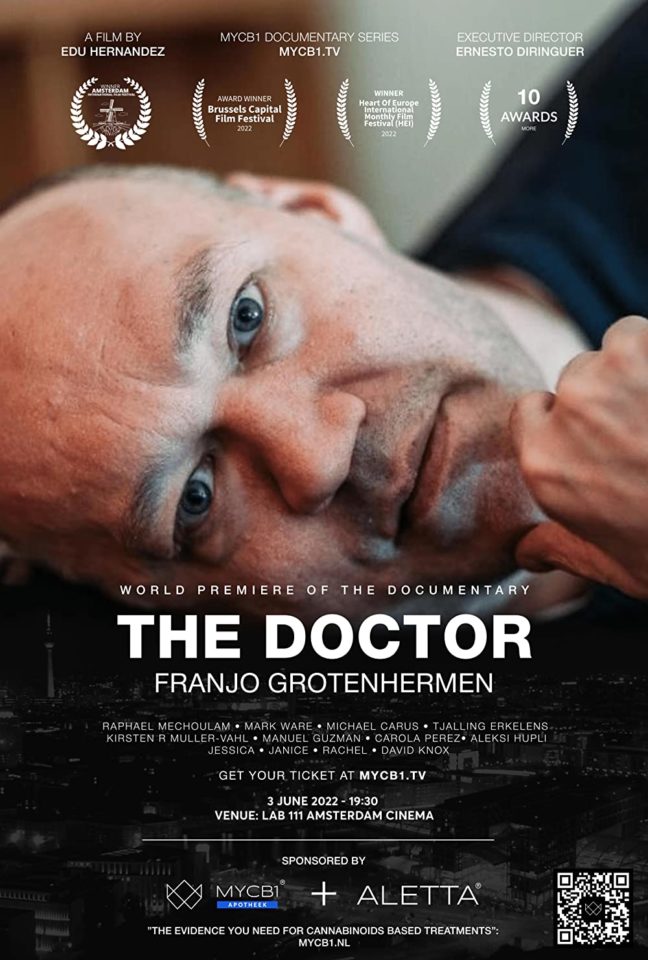
‘The Doctor’—A Documentary About a European Pioneer in Cannabis Legalization

It doesn’t feature any supersonic jets or red carpets and Tom Cruise is nowhere to be found. Despite this, a new film, The Doctor has been racking up accolades on the international film festival circuit.

That said, if there was a person in the European cannabis industry who has always taken a “highway to the danger zone” albeit of a medical kind, it would be Dr. Franjo Grotenhermen.

The film, directed by Eduardo Hernandez, is a biographical look at the life of Franjo so far. And that is certainly an interesting journey. Per Hernandez, “Anyone who knows Franjo knows that his story is incredible. He is a person who has dedicated his life to fighting for the rights of patients and pushing the boundaries of science. As a filmmaker, it seemed to me that the general public would be interested.”

Who Is Doctor Franjo Grotenhermen?

The elevator pitch on Franjo, as he insists on being called, is easy to do in just three words. Pioneering cannabis doctor.

Yet this is still a fairly radical proposition, particularly in Germany, but also, rather sadly, still pretty much everywhere else too. As a result, this description also means a great deal, even today, as the medical profession as a whole still struggles with overcoming the stigma surrounding the efficacy of the plant.

Grotenhermen’s is certainly a dramatic story. From the beginning, Franjo, who also suffers from a debilitating condition himself, has put himself at the forefront of the fight. In Germany that is still a highly hazardous place to live and work.

“The goal was to reach an audience that is not academic and that does not know what medical cannabis is,” said Hernandez by email when reached by High Times.

The film takes place during the 10th Conference on Cannabinoids in Medicine, right before the onset of the Pandemic in late 2019. The IACM, which Franjo also helped found, has been one of the most influential global medical cannabis conferences for several decades. The Doctor also features interviews with among others, famed Israeli cannabis researcher, Dr. Raphael Mechoulam.

So far, The Doctor has made the festival circuit (even winning quite a few awards) and is about to have its world premiere this Friday, in Amsterdam before continuing on an international journey that is literally taking its message around the world.

Doctor
Courtesy of The Doctor film

Doctors Are Still on The Frontlines of The Medical Fight

While it is unfortunately still not common knowledge, doctors have frequently paid a heavy price for being cannabis advocates. This was certainly true in places like California as prescribing doctors could have their licenses stripped for prescribing the drug (thanks to the Clinton Administration, both before and after the historic vote in California in 1996).

That threat has never really gone away in many places. Indeed, in Germany over the last five years since “medical reform” doctors are visited frequently by the police who are still conducting “investigations” that all too often leads to interrogations of both patients and doctors if not arrests, criminal charges, and jail time.

Franjo has never wavered from the challenge or the path. Indeed, he went on a hunger strike in 2017 over the restrictive language in the first medical cannabis reform legislation in Germany, which to this day prevents the majority of patients who need the drug from accessing it (legally).

It is often a thankless journey.

The Doctor, beyond being a biographical profile of one of the most fearless medical crusaders for cannabis reform, is also an educational look, and from a medical and scientific perspective, of the importance of reform on the eve of what is hoped will be full and final German cannabis legalization.

The post ‘The Doctor’—A Documentary About a European Pioneer in Cannabis Legalization appeared first on High Times.


source https://hightimes.com/culture/the-doctor-a-documentary-about-a-european-pioneer-in-cannabis-legalization/?utm_source=rss&utm_medium=rss&utm_campaign=the-doctor-a-documentary-about-a-european-pioneer-in-cannabis-legalization

Virginia Lawmakers Want to Recriminalize Pot

Virginia state lawmakers are seeking to make public possession of more than four ounces of pot a crime again, less than a year after the legislature voted to legalize recreational cannabis for adults.

Last year, the Virginia General Assembly passed legislation to legalize possession of up to an ounce of pot for personal use. Possession of between one ounce and one pound of cannabis was made a civil infraction carrying a fine of no more than $25, while possession of more than one pound of weed remained a felony.

But under a budget proposal released by state lawmakers over the weekend, public possession of more than four ounces of cannabis would become a Class 3 misdemeanor criminal offense punishable by a fine of up to $500. A second offense would be a Class 2 misdemeanor, with convictions subject to a sentence of six months in jail and a fine of up to $1,000.

The bipartisan budget compromise is supported by Republican House Appropriations Chair Barry Knight and Democratic Senate Finance and Appropriations Chair Janet Howell, according to a report from the Richmond Times-Dispatch.

“We didn’t get all we wanted but I think, in view of what we got, we are very satisfied,” Knight said after the budget proposal was released on Sunday evening. “I don’t think that the Senate prevailed over the House or the House prevailed over the Senate.”

Last year, the Joint Legislative Audit and Review Commission recommended that Virginia follow the lead of other states and make possession of larger amounts of cannabis a misdemeanor, a change he said was desired by police.

“It’s more in line with what other states are doing so we’re not an anomaly out there by ourselves,” said Knight. “We know our law enforcement wanted it.”

Virginia Activists and Some Lawmakers Oppose Recriminalization

But cannabis activists and some lawmakers, including state Senator L. Louise Lucas, oppose the change in the budget proposal.

“I voted against this before and I am working to stop this latest effort to criminalize marijuana,” Lucas tweeted. “This is targeted at black and brown people who have been overcharged with these ‘crimes’ in the past. We do not need to go back to the past with these laws!”

Chelsea Higgs Wise, executive director of the group Marijuana Justice Virginia, joined other activist organizations in an email sent to Howell on Sunday evening.

“Please stop finding more ways to criminalize Virginians,” she wrote, adding, “let’s work on righting the wrongs from the failed and destructive prohibition.”

“Virginia officials must not allow the budget document to become a legislative workaround to enforce the will of the administration at the exclusion of the voice and will of the people,” Higgs Wise added.

Budget Deal Also Has Hemp Provisions

The budget compromise also includes language that creates new labeling and lab testing requirements for hemp products. The proposal would ban selling edible products containing THC to anyone younger than 21, although it includes an exception for medical marijuana patients. The plan would also prohibit products sold in “certain child-friendly shapes or that are counterfeit products.”

Dylan Bishop, a lobbyist with the Cannabis Business Association of Virginia, praised lawmakers and the administration of Governor Glenn Youngkin for working with the hemp industry to draft the proposal.

“It adequately addresses the legitimate public safety concern over irresponsibly packaged and labeled products without unfairly disadvantaging Virginia’s farmers, retailers and small businesses,” Bishop said in a statement.

But Virginia NORML executive director J.M. Pedini, who backed legislation that would have regulated delta-8 products, said that the compromise agreement “would maintain existing loopholes.”

The budget proposal is not the first time Virginia lawmakers have tried to roll back the cannabis legalization bill passed last year. During this year’s regular session of the General Assembly, Senator Adam Ebbin introduced a bill to regulate cannabis sales that would have created a new misdemeanor possession offense. And in April, the state Senate rejected a proposal from Youngkin that would have set criminal penalties for possession of more than two ounces of weed as part of a hemp industry bill.

The General Assembly will meet in a special session to consider the budget proposal, including the provision to recriminalize possession of more than four ounces of pot.

The post Virginia Lawmakers Want to Recriminalize Pot appeared first on High Times.


source https://hightimes.com/news/virginia-lawmakers-want-to-recriminalize-pot/?utm_source=rss&utm_medium=rss&utm_campaign=virginia-lawmakers-want-to-recriminalize-pot