RealTestedCBD.com aired the “first CBD commercial on major television networks” to promote the website’s lab-tested information on CBD products on Monday, January 3. The website compares analyses of various CBD products, side-by-side, to help consumers safely navigate the hemp-derived CBD industry.
The commercial aired in Las Vegas, Nevada; Denver, Colorado and San Diego, California’s CBS and ABC affiliates for a 30-second tutorial that explains why consumers need to know what’s in their CBD products. Cannabis ads were nixxed from Super Bowl LIII in 2019, and other companies laid claim to early CBD commercials.
The unbiased platform that is designed to separate fact from fiction about CBD products. The timing couldn’t be more prescient amid the rise of hemp-derived compounds and additives—and people’s health is on the line. For instance, delta-8 THC divides the hemp industry based on the extraction process. Other compounds are emerging, with CBD found practically everywhere. While one product may be highly effective, another may be improperly sourced, contaminated or improperly labeled.
The website features over 350 CBD reviews about over-the-counter products further educating people, including the consumer who is new to CBD. For people who are concerned about their health, the website—the first of its kind—provides independent lab tested results on all major products including what is in the product, where it came from, how true to the label claims are, and if it passes pesticide screening. You can also find discount codes as a bonus.
“As CBD is becoming more and more common we wanted to make sure we are grabbing the attention of all consumers on all media platforms and TV seemed like the next appropriate place to do it,” Real Tested CBD General Manager Steve Townsend told High Times. “The CBD industry is kind of like the Wild West right now— there aren’t many rules and regulations as to who can create a CBD brand, and who can sell CBD products.”
Video courtesy of Real Tested CBD.
Townsend continued, “The result of this issue is the creation of an industry where it is very difficult for consumers to distinguish good brands from bad brands, and good products from bad products. By using RealTestedCBD.com we are providing a simple solution to educate someone about all the benefits CBD provides.”
Beginners may not know the difference between CBD purchased at a gas station versus products sourced from quality retailers. Education is needed, and sometimes it starts with the basics. Invisibly’s Realtime Research survey, for instance, found that 58 percent of Americans still don’t know the difference between CBD and THC—after over 1,000 people were surveyed.
RealTestedCBD.com commercials will run on San Diego, Las Vegas and Denver’s ABC affiliates and Vegas’ CBS affiliate through March 25. To view the commercial, please click here and to learn more about Real Tested CBD, please visit RealTestedCBD.com.
Comparing Lab Results
Real Tested CBD relies on empirical tested data from the independently-owned Earth Labs located in Irvine, California, to show someone what is in a CBD product including where it came from, how true to the label claims and did it pass pesticide screening.
Currently on the website, 6.04 percent of lab batches failed for pesticides or solvents. For Package vs Tested Average Accuracy, lab batches were off by about 38mg on average. The latest lab batch was updated by Earth Labs on November 15, 2021, at 9:42 am.
The CBD product industry is riddled with misleading labels and unproven claims. You can see the official Earth Lab Testing Report PDFs attached to every product that is reviewed by RealTestedCBD.com.
You can compare test results of products that show not only CBD, but CBG, CBN, delta 8 and other compound content.
RealTestedCBD.com was created to provide the truth to many falsehoods and misinformation there is about CBD. For more information, please visit the website.
The opening weekend of recreational cannabis sales in Big Sky country brought in big profits.
That’s according to Montana’s Department of Revenue, which said that cannabis sales brought in more than $1.5 million last weekend, the first days that the state’s legal weed market opened for business.
According to the Helena Independent Record, the “Governor’s Office of Budget and Program Planning projected $130 million in recreational sales in 2022, climbing to $195.5 million in 2023 once the moratorium on new businesses ends.”
The state is imposing a 20 percent sales tax on recreational cannabis. (Medical marijuana, for comparison, is taxed at only four percent in Montana.)
Kristan Barbour, an administrator with the revenue department’s Cannabis Control Division, told the Independent Record that the “rollout of the adult-use program went off without any issues from the department’s supported IT systems.”
“We were able to successfully verify with (the) industry that our licensing and seed to sales systems were working on Friday to ensure a successful launch on Saturday, January 1, 2022. The successful launch was a result of staff’s hard work and planning over the past six month to meet the challenges of implementing HB 701,” Barbour said in a statement to the newspaper.
HB 701 was the bill that was passed by Montana lawmakers and signed into law by Governor Greg Gianforte last year after voters in the state approved a ballot initiative in 2020 legalizing recreational cannabis use for adults aged 21 and older.
Montana was one of four states where voters approved legalization proposals at the ballot in 2020, joining Arizona, South Dakota and New Jersey.
HB 701 established a framework for the new marijuana marketplace and also established the so-called the HEART Fund, which will use revenue from the recreational pot program to fund substance abuse treatment.
“From the start, I’ve been clear that we need to bring more resources to bear to combat the drug epidemic that’s devastating our communities,” Gianforte said at the time. “Funding a full continuum of substance abuse prevention and treatment programs for communities, the HEART Fund will offer new support to Montanans who want to get clean, sober and healthy.”
Sales began on New Year’s Day, with local television station KTVH reporting that an “estimated 380 dispensaries in 29 counties are now able to sell marijuana to both medical and recreational customers.”
Regulators in Montana were working up until the end of 2021 to iron out rules for the new marijuana program, issuing a slate of proposals as late as October. Barbour said at the time that the goal of the proposals was “really to be business-friendly and to try to work with the industry in a fashion that makes the rules adaptable to their current business structure and that they’ll be able to evolve without a whole lot of pain.”
Last month, members of the state’s Economic Affairs Interim Committee approved a slate of the proposals.
Montana Took the Plunge
When recreational pot sales kicked off in Montana on Saturday, there were eager customers waiting to make history (and maybe alleviate their New Year’s hangovers with some bud).
The Independent Record reported that some “dispensaries in Helena had lines of people packed inside to avoid cold temperatures, while others saw a small but steady stream of foot traffic through noon.”
Medical cannabis has been legal in Montana since 2004. J.D. “Pepper” Petersen, the owner of the Cannabis Corner dispensary in Helena and a leading advocate for the 2020 legalization campaign, told the Independent Record that 99 percent of the customers to his shop on Saturday were there for recreational weed, not medical.
Legal sales of smokable cannabis flower began in Louisiana over the long holiday weekend, giving patients registered with the state’s medical cannabis program a new option for accessing their medication of choice.
Louisiana lawmakers legalized the medical use of cannabis in 2015, with dispensary sales of regulated medical cannabis products beginning in 2019. Under the state’s program, patients with one or more qualifying medical conditions could receive a recommendation from their doctors to use cannabis medicinally.
But limitations of the program drew criticism from medical marijuana advocates. The supply of medical cannabis in Louisiana was strictly regulated, with only three cultivators affiliated with state university programs authorized to grow medical cannabis in the state. Only nine dispensaries distributed throughout the state were permitted to dispense medicinal cannabis to patients.
Additionally, inhalable medical cannabis products including vapes and flower were prohibited under Louisiana’s medical cannabis program, which only allowed forms of cannabis including tinctures, topicals and gummies. Metered-dose vaporizers were authorized in 2019, but smokable forms of marijuana remained unavailable to patients.
Last year, Democratic Gov. John Bel Edwards approved legislation to expand Louisiana’s medical marijuana program that included the addition of raw forms of cannabis to the menu of allowable products. Legal sales of smokable medical cannabis began in the state on January 1.
“It’s an exciting day; it feels like the first day again from August 2019 when the first products became available,” said John Davis of Good Day Farms, the private partner and grower for the Louisiana State University AgCenter.
More Choice for Patients
Advocates for including smokable cannabis flower in Louisiana’s medical marijuana program argued that the processed forms of cannabis available to patients are more expensive than dried forms of the plant. Ruston Henry, owner and pharmacist at New Orleans licensed dispensary H&W Drug Store, told local media that permitting lower-cost cannabis flower will benefit the state’s medical marijuana patients.
“That cost saving is passed onto the customers,” Henry said. “If you decrease the cost, it’s one less barrier that’s an impediment to the patients. More people should be able to participate in this program.”
Patients, however, say they have not seen a reduction in the price they are paying. Corbet King, who uses medical cannabis to treat chronic pain and bipolar disorder, drove for an hour to West Monroe to visit Delta MedMar, a licensed cannabis dispensary in northeastern Louisiana. But he said that he was disappointed by the prices of cannabis flower, which he noted can be bought far less expensively from illicit sources.
“They said it would be cheaper, but it’s not,” said King. “I’ve been waiting on the flower option, but this more than double the street price” of unregulated cannabis.
“I feel like we were lied to,” King added.
With Saturday’s launch of legal sales, prices for one-eighth of an ounce of cannabis flower at Louisiana’s nine licensed dispensaries ranged from $35 in St. Charles up to $80 in New Orleans, according to media reports. Greg Morrison, a co-owner of Delta MedMar, said that prices would likely come down as more patients join the medical cannabis program and suppliers make more products available.
“When there are more patients and more products, prices are going to be more affordable,” Morrison said.
Davis said that Good Day Farms has ramped up its cultivation to meet the demand for smokable forms of marijuana, with two cannabis strains available now and additional varietals in production.
“They’re stocked up right now, and there is more flower in the department of agriculture and forestry’s testing pipeline that will be available (we are) anticipating (in) mid-January,” he said.
“So over time, we’re going to be releasing additional strains to the market so that patients will have an ever-increasing strain selection,” Davis added.
Republican state Representative Tanner Magee, the speaker pro-tem of the Louisiana House of Representatives and the sponsor of the medical cannabis expansion bill, told reporters that he was concerned about early reports of high prices on newly available cannabis flower.
“It’s the first day, but I’m going to monitor it and see if there needs to be adjustments moving forward,” said Magee. “One of the primary reasons to expand the options in the program was to make the medicine more affordable and accessible.”
Louisiana Commissioner of Agriculture and Forestry Dr. Mike Strain said that the addition of cannabis flower to the state’s medical marijuana program is likely to change how patients take their medicine.
“I think there’s going to be a shift in consumption patterns,” Strain said. “We will probably have some overall increase in utilization, but it will remain to be seen. We’ll know in about six months.”
Herbies Seeds is blowing up the market this year with its hot new line of cannabis seeds. One variety in particular has been taking the cannabis world by storm: Grandmommy Purple, an Indica-dominant strain that redefines relaxation.
Before digging into why Grandmommy Purple should be the next strain on your grow list, let’s talk about Herbies Seeds. Already a well-established seed retailer in the cannabis market, Herbies has cracked the code of what a modern grower wants:
Herbies website is user-oriented, with sleek design and simple order placement process (registration is not necessary).
It sends seeds worldwide and offers several payment and shipment options, including safe stealth shipping.
All buyers get to benefit from 24/7 customer support and nice bonuses added to all orders, including free seeds.
Herbies has been making waves this year after branching out into producing its own potent and tasty genetics. The company has applied knowledge of weed consumers’ needs by teaming up with Spanish breeders to pump out a new line of seeds last May and another one later in August. Don’t worry, you’ll get an introduction to all of the Herbies’ different strains later in this article.
All About Grandmommy Purple
Herbies’ newly-released Grandmommy Purple is already a hit among customers—over the last few months, the seeds have rapidly risen to stardom as the currently best-selling variety in the Herbies store. What makes this strain so prolific, you might ask?
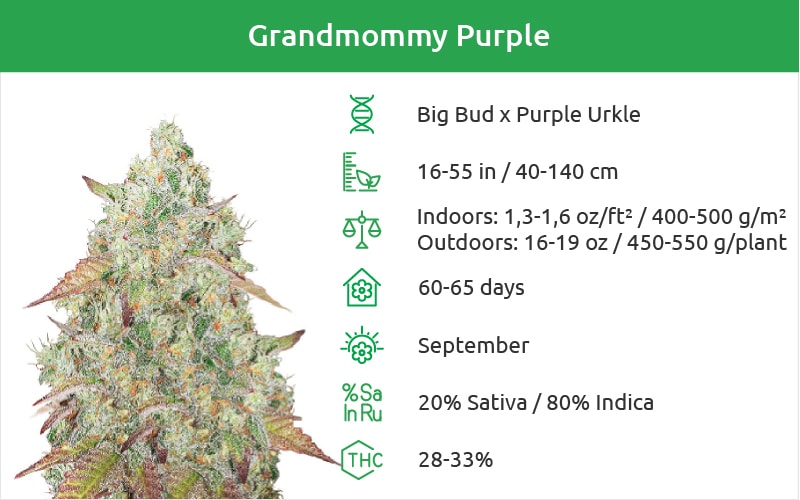
Spanish breeders have put their heads together to create a new phenotype from parents Big Bud and Purple Urkle. Truly a powerful combination, the resulting Grandmommy Purple is an Indica-dominant (80 percent) hybrid with skyscraping potency ranging from 28 to 33 percent THC—a level that very few strains in the world reach.
Courtesy of Herbies Seeds
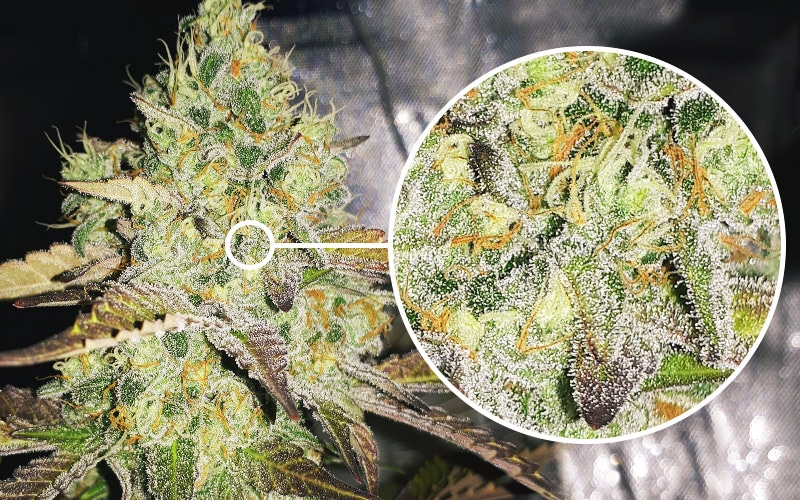
It might just be love at first sight—your eyes won’t know what to focus on first! The buds are a light to emerald green accented with a healthy dusting of sparkling trichomes and bright orange hairs. The sugar-topped leaves, tinged with reddish-purple tones reminiscent of fall, complete the bouquet.
Courtesy of Herbies Seeds
These Grandmommy Purple seeds were made for growers searching for a no-fuss strain. Feminized to guarantee that seedlings will grow up to be female, the seeds mature into small plants indicative of their Indica genetics. Growing to a maximum average height of 40 to 140cm (15.5 to 55 inches), commercial and hobby growers alike will be pleased with these ladies’ yields of 500g/m2 (1.6oz/ft2) indoors and up to 550g (19.4oz) per plant outdoors. In just 60 to 65 days of flowering, you’ll be graced with dense, sticky nugs of beautiful cannabis.
Sure, Grandmommy Purple’s not the biggest plant on the block, but this is one of those situations where size doesn’t matter. As we mentioned earlier, the 28 to 33 percent THC content of this strain is truly out of this world, and that’s what makes her the star of the show. The buds that grow from this Herbies strain are dense and sticky with resin—amazing rolled up to smoke, but even better when set aside for vaporizing or making concentrates.
Even though Grandmommy Purple was released not that long ago, the reviews on the first grown and harvested plants keep coming in. On Growdiaries, one reviewer says “She is looking amazing… such wonderful strain to work with,” while another grower adds, “In flower, she showed awesome pink/dark purple colors and a great scent. Buds were dense and stuffed with trichomes. Just perfect for me. Pictures can’t show her real beauty. From me, 10 out of 10.”
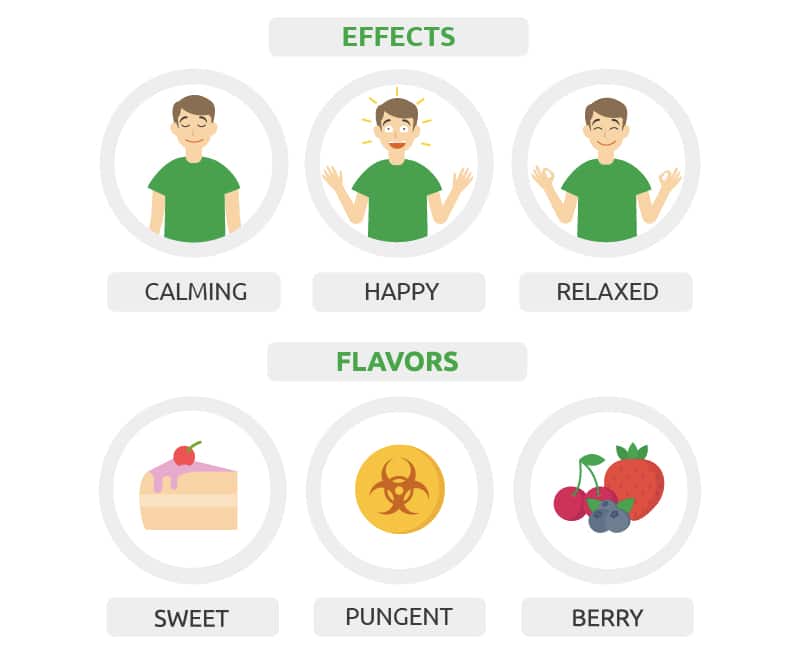
After putting in the hard work and patience of growing, harvesting, drying and curing… it’s time to enjoy some Grandmommy Purple! Combustion introduces a pungent scent highlighted by a mellow sweetness, like wild berries harvested from the forest. Her fruity terpene profile is also evident in the flavors of the smoke—a sweet respite tasting of fruity hard candies. With each puff, you’ll feel like you’re dipping your hands into the bowl of sweets in Grandma’s living room.
Courtesy of Herbies Seeds
It won’t be long before the effects of Grandmommy Purple start to envelop you like a handmade quilted blanket. Her Indica-heavy ancestry makes for a clear-headed euphoric experience punctuated by deep-seated relaxation. Ready to cuddle under the blankets on the couch watching a movie? Or are you simply ready to crawl into bed? Whatever your weekend chill-out plans are, Grandmommy Purple’s elevated entourage effect will always achieve the perfect state of medicated relaxation.
Without a doubt, Herbies Seeds has knocked it out of the park with this strain!
Grandmommy Purple is a wonderful addition to any cannabis enthusiast’s seed collection, and is only one of the reasons why you should turn to Herbies Seeds for the hottest new strains.
Why You Should Check Out Herbies
Courtesy of Herbies Seeds
What else does Herbies Seeds have to offer? Aside from a massive catalog of thousands of cannabis strains from seed banks all around the world, Herbies’ very own seed bank has been gaining traction since its release earlier this year. Their branded strains are already being actively discussed online—fans of Herbies are sharing their successes on social platforms like Reddit and Growdiaries, where strains from Herbies seeds have already surpassed 30 diaries with an average strain score of 9.5 out of 10!
The selection is extremely well-rounded—there’s a strain here for everyone —photoperiods and autoflowers, genetics with high THC levels and fruity terpene profiles, the ones for buds drowning in resin or for branches heavy with rock-solid flowers, you name it!
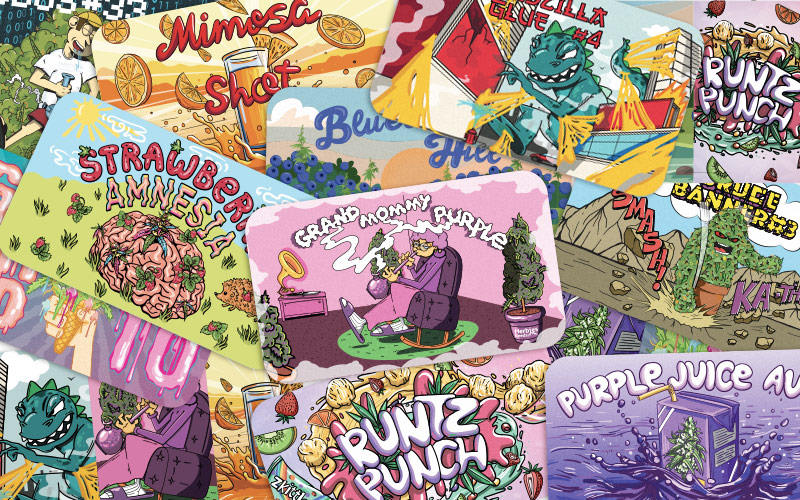
Herbies Seeds is turning heads with all of these fantastic new cannabis seed varieties, especially because they cater to the needs of home growers everywhere. What better way to find your next favorite strain than to grab a Herbies Seeds mix pack and decide for yourself? They’ve certainly proved themselves as a seed bank that won’t disappoint. If you don’t know what to start from in exploring Herbies’ line of seeds, we also recommend giving a try to Godzilla Cookies Auto, an autoflower with large yields of 27 percent THC bud, or mood-enhancing, orange-flavored 30 percent THC Mimosa Shot.
What Are You Waiting For?
The launch of Herbies’ very own seed bank has been incredibly exciting news for growers of all skill levels. It’s almost impossible to choose a favorite strain from Herbies… almost. It’s hard not to fall in love with Grandmommy Purple—a strain that’s incredibly potent while somehow also as sweet as pie. You might find yourself torn between keeping the buds whole for their gorgeous bag appeal or taking advantage of all that sticky resin for ultra- potent concentrate.
Any way you swing it, Herbies Seeds is already proving to be a producer of quality cannabis seed varieties. It seems there’s only one way to go from here: higher and higher! Check out the Herbies website for an extensive catalog of all things cannabis seeds. Trust us, your garden will thank you.
Si bien es un compositor, cantante y pianista con seis álbumes editados en solitario, un histórico colaborador de Andrés Calamaro y Ariel Rot, entre otros, y cuenta con una frondosa carrera musical desarrollada entre Argentina y España, Andy Chango es conocido por muchos primero por su personalidad, su elocuencia al hablar de consumos sin pelos en la lengua y su maradoniana precisión para construir frases instantáneamente icónicas. Así que no es extraño que hoy, a sus 51 años, esté muy cómodo en su reciente faceta de conductor de radio.
Andy, nacido Andrés Fejerman, pasó gran parte de su vida viviendo entre Buenos Aires y Madrid, donde nació su hija Martina, hoy con 19 años. En la actualidad, instalado de este lado del charco, tiene en Futurock una casa. Además de colaborar en el programa de Julia Mengolini,Segurola y Habana, está al frente de laClínica Chango, un programa semanal que ya lleva un año de éxito, en el que explora tópicos que le resultan relevantes, muchas veces poco felices, con el desparpajo y el humor que lo caracterizan.
“Ahí hablo de lo que quiero. Los programas nunca son vacíos. Siempre son sobre algo que me preocupa, como el cambio climático o los laboratorios, algo para festejar como el alcohol u otras cosas, o algo de cultura que me interese difundir”, cuenta el rockero desde su casa. La idea, más que educar, es echar luz: “Sin hacerme el catedrático porque no lo soy, pero por ahí estoy en el medio de la gente que no lee y la que lee y puedo servir de puente”.
Hoy por hoy también trabaja en un nuevo programa que se relaciona con una sala de conciertos, el Café Berlín de Madrid. Una sala que considera como “su casa”, donde se junta con su grupo de amigos -en sus palabras, “los mejores músicos de jazz y flamenco que hay”- cuando está en la capital española.
El bar y sala de conciertos abrió una sucursal en Buenos Aires, con una presentación de Dante Spinetta, y Andy se está cargando al hombro todo lo que conlleva la apertura, que incluye eventos y el lanzamiento de este nuevo programa de radio, llamado precisamente ‘Casa Berlín’, con música en vivo de España y, también, de Argentina.
“Llevo muchos años aislado y sin salir de noche, y me encanta que sea por una cuestión laboral volver a salir con los amigos y que, de paso, sea un trabajo. Porque salir a no hacer nada lo hice toda la vida”, reflexiona.
En lo que refiere a actividades como músico, hoy trabaja en la canción de créditos para una película española. También se puso a grabar con su amigo Mariano Otero. “Esa suerte que tengo de siempre poder estar con músicos buenos alrededor”, dice. En el marco de Casa Berlin, van a armar un concierto navideño entre amigos; configurando una suerte de crossover entre Futurock y el bar, aquellxs socies de la comunidad de la radio tendrán beneficios para poder asistir a estos eventos.
“Yo lo quiero hacer para divertirme, no tengo ningún disco que presentar ni ningún afán artístico, es para festejar con mis amiguitos”, sentencia con una sonrisa.
Recientemente, tocó en el gran festejo por el cumpleaños de Charly García que se celebró en el Centro Cultural Kirchner. “Esa plata me la voy a gastar en el día en una sola cosa porque es dinero mal ganado. ¿Cómo voy a cobrar por ir a cantar ‘Mr. Jones’ con Samalea, el Zorrito y María Eva? Uno pagaría por hacer esas cosas. Es un acto de amor”.
Siempre que puede, Chango menciona a los amigos. Es un amiguero nato. ¿Cuál es su plan de amigos ideal? “Que no vengan, que estoy muy tranquilo”, ríe. “Me gusta verlos de a uno. En situaciones sociales me pongo muy eufórico y termino siendo un personaje siempre. Entonces, disfruto más la pequeña reunión, dos amigos y les doy de comer súper rico. O un amigo, estar dos días juntos, prender un fuego, charlar y jugar al tenis”.
Leer, ver, escuchar, fumar
El porro, dice, lo ayuda todos los días de su vida. “Yo tengo un trastorno de ansiedad clarísimo desde los 13 años, y el porro me permite estar más tranquilo, comer más y dormir mejor”, explica. Los porros diurnos tiene que regularlos, dice, porque si fuera por él, es capaz de quedarse todo el día fumado en la cama, leyendo y mirando películas.
Estar un poco loco es, a esta altura, un estado natural. Le resulta más fácil identificar los momentos de particular sobriedad. Fumado le gusta ir a hacer compras en la moto y saludar a los chicos del pueblo cercano a la quinta donde vive, paseando al sol. También, jugar al tenis que, según dice, “voy más relajado y me gustan más los colorcitos de la pelota, la tierra, los árboles. Me concentro más en el exterior que en el partido”. Y para ver cine es crucial. “Ya sin porro no me gustan, salvo que sea LA película”, dice; y va más allá: “De todo el cine, entre Truffaut, Wim Wenders, todo el cine argentino, si tuviera que elegir una película sola sería ver por primera vezHarry Potter2”.
Es un gran lector. Como con todo, en los libros se mete de lleno: “Nunca pude poner pausa cuando estoy metido en una historia”, dice. En este momento, como si fuera una metáfora de la vida misma, disfruta de pequeños fragmentos de los libros. De joven tenía mucha ansiedad por llegar al final, pero hoy un libro bien escrito le parece disfrutable desde la tercera página. “Empiezo a notar que no me gustan tanto los finales literariamente, son un error forzado, en la mayoría de las novelas no deberían existir. Porque condicionan un montón de acontecimientos que por ahí terminan siendo lo menos creíble del libro y con una prisa innecesaria cuando estamos todos adentro de un mundo”, dice.
Hace poco releyóEl Banquetede Platón y quedó fascinado. “La pasé bomba viendo cómo los griegos se juntaban a chupar vino hace dos mil años”.
¿Y qué música escucha? Hoy en día, dice, no demasiada. Se reconoce como fan del silencio. Pero al hablar de música y porro, menciona algo que a simple vista parece una obviedad: Bob Marley. “Se nota el porro que se fumó el cuando cantaba, y te pega a vos cuando lo escuchás. Es como un porro transitivo que hace un viajecito en el tiempo y cuando lo escucho tengo la sensación de que estoy fumando el mismo porro que él. Siento que iba tirando el humo a través del micrófono, va a través del cable y termina saliendo por el parlante”.
Liberen a los presos por plantar
Cuando Andy Chango habla de drogas, el decorado se calla. Y él tiene muy en claro que al hablar de marihuana como persona pública no es todo risas, paseos y Harry Potter.
Chango no se siente para nada identificado con la forma adquirida por la supuesta militancia cannábica hoy por hoy, y le genera mucho rechazo la hipocresía que hay detrás de la fiebre por la marihuana que está expandiéndose a nivel mundial.
Pero no siempre fue así: el músico identifica que fue un acérrimo militante cannábico cuando llegó a España, en el año 1997. Estaba muy cerca de la revista Cáñamo, de Barcelona. “Ahí noté que se tomaban todo tipo de sustancias habidas y por haber, y con gran sabiduría, pero en lo público sólo se defendía a la marihuana”, cuenta.
“Hace años que vengo notando que la lucha de la marihuana está excluyendo a las otras drogas”.
En España comenzó a ver cómo crecía la industria mientras no se modificaban las leyes y cómo las cárceles estaban llenas de pichis. “Con respecto al porro, pasaron mil años, es un país que pasó por gobiernos muy progres, e igualmente nunca se legalizó nada ni se mejoró ninguna condición”, describe.
Con esto en mente, cuando volvió al país hace diez años anunció a sus amigos cannábicos que se retiraba de la lucha.En principio porque ya estaba muy extendida y no necesitaba de él como sí tal vez las luchas por la normalización de otras drogas. Ya era una lucha ganada, aunque fuera por intereses comerciales estadounidenses disfrazados de salud y progresismo.
“Todo lo que pasa con las drogas en el mundo es porque Estados Unidos quiere”, se lamenta Andy Chango con cinismo. “Mis amigos del periodismo cannábico terminaron todos peleados, porque algunos se dedicaron full al negocio, gente que militó toda la vida terminó vendiendo productos, otros les decían ‘caretas’, y así”.
“Mi lucha era la de las ideologías”, cuenta. Y trae a colación una anécdota reciente: en la última ExpoCannabis, Chango se unió a los Presos por Plantar y llevaron su reclamo a las puertas de La Rural.
“Tuve que ir a manifestarme con los presos, sin poder creer que en ese antro de Videla que todavía tiene un llamado Salón Martínez de Hoz hagan ese evento sin considerar que ningún porcentaje de la entrada vaya para los que todavía están presos por plantar, sin que nadie adentro del gran bussiness diga ‘che, ya que tenemos guita para alquilar La Rural y vendemos aceite a precio astronómico, ¿por qué no les giramos unos mangos a los compañeros que siguen presos?’. En muchos casos son gente de afuera que vienen y absorben a un montón de cultivadores ¡y luchadores! de acá”, se indigna.
Andy Chango tiene su carnet de Reprocann. Un oyente de Clínica Chango con un amigo preso lo contactó, y ahí cayó en cuenta de la injusticia. “Este chico está preso por tener tres plantas y yo tengo permiso para plantar nueve”, se dijo.
Ese fue el puntapié que necesitaba para volver a hablar de cannabis. “A mí me aburre soberanamente hablar de porro. Es obvio que hace bien y todo lo que se dice. Hace cuarenta años que consumo y ya discutí con todo tipo de perejiles. Ya la ciencia apoya y el negocio apoya. Como luchas a mí me gustan más heavies, más imposibles, esta es una batallada ganada. Pero la lucha de los presos sí, porque es un atropello a la razón, y porque estar un solo día preso es una pesadilla que nadie imagina”.
Y sigue: “Cualquier movilización que no incluya a lxs presxs no me interesa porque me parece un error logístico e ideológico”.
Está inscripto y claramente está a favor, pero igualmente tiene sus dudas sobre la idoneidad del sistema Reprocann. “Se va a ir a pique la salud mental mundial porque van a haber veinte millones de certificados pagos de gente supuestamente enferma. En vez de legalizar lo lúdico inventan esta payasada. Por cinco lucas te diagnostican lo que quieras. Aparte, ¿qué argentino no tiene ansiedad, depresión o insomnio?”, reflexiona.
La lucha está en las mentes
A su parecer, todas las drogas deberían ser legales, pero su gran lucha al cabo no es por ninguna droga sino por las libertades individuales. Pero, aclara, sin que eso implique la libertad de los aristócratas. “Todo siempre partiendo de una justicia social, que no existe ni va a existir nunca. Sé que el tema de las libertades individuales siempre va a ser relativo porque con guita podés hacer lo que se te canta el orto. La libertad y el poder van de la mano, pero el que tiene poder también es esclavo del poder, por suerte, porque sino serían felices, los hijos de puta”.
Pero no es tan simple tampoco. Andy Chango es nihilista ante la humanidad entera y no confía ni en sí mismo. “Mi lucha es por defender siempre lo que pienso y lo que soy más allá de las leyes, porque no creo en las leyes. No creo ni en la estructura mental que tengo, creo que viene de una cultura que es chota y que nos la meten en la cabeza de chicos, todos los seres humanos venimos fallados, y hay que reiniciar y empezar de cero cuanto antes. Todo lo que rige nuestra conducta me parece cuestionable”.
Sin ponerse en extremo radical, constantemente intenta deconstruir estos mandatos. Dejar atrás viejos vicios de conducta: “A veces veo fútbol a escondidas y, por supuesto, no lo pago. Pero entiendo que es un vicio privado que hay que defenestrar. También intento bajar el ego, o cortar con la sexualidad mal entendida, esos vicios de rockero que tuve cuando tenía 20, esa idea de que hay que coger mucho… por ahí no tenía ni ganas, o para coger estaba manipulando gente, son cosas que ahora intento atenuar. Al menos saber donde soy choto y tratar de serlo lo menos posible”, reflexiona.
La incorrección, siempre lúcida y enfrentando al poder, es su marca registrada. Así fue siempre su discurso en lo que a drogas refiere: es, conscientemente o no, un vocero de aquellxs que usan drogas porque quieren y porque les gusta desde hace muchos años, mucho antes de que el discurso de la tolerancia y la reducción de daños estuvieran extendidos.
Su postura es sabida: que cada unx haga lo que quiera, todo tiene su potencial si es usado a consciencia. Entonces, ¿existe alguna droga que sea inherentemente mala para Andy Chango?
El glosario Chango de sustancias
“No creo que haya cosas buenas y malas.Creo en las cosas que existen y en las que no. Por ejemplo, Dios no existe y las drogas sí existen.Entonces, el que las quiera usar que las use, porque acá están”, responde.
A propósito de los aportes que hicieron las sustancias a su vida, Chango asegura que a todas tiene algo para reconocerle.
Primero habla del alcohol: le aportó desinhibición. “A los 14 años era un pibe totalmente tímido que había vivido la infancia en dictadura. El alcohol me abrió las primeras puertas a la sociabilización y a los besos en la boca”, elabora.
Sobre la cocaína tiene una postura interesante y muy de insider. Su experiencia se remonta a los ‘80 y ‘90, auge del rock y también de la sustancia. “La coca me abrió muchas amistades sociales y muchos amigos músicos de rock, fue un punto de unión muy fuerte en los ‘90. Estaba muy satanizada y, para los amigos, ser del club de los que tomaban, unía mucho: así como después me quitó muchos amigos. En mi experiencia cuando pasas muchos años tomando mucha coca con muchos amigos después te quedás sin ninguno. Uno se va poniendo más rayado, se va enojando por boludeces, te terminás sintiendo traicionado o traicionás”, cuenta. Sí le resultó muy estimulante cuando se embarcó a escribir un libro: “Concentrarte en una actividad intelectual en una dosis justa puede ser muy útil, aunque después dañina para el sistema nervioso”, cuenta.
Con respecto a las plantas sagradas, cuenta que hace poco menos de dos décadas estuvo un mes y pico tomando ayahuasca día por medio, en el Amazonas, como parte de una internación para rehabilitarse de otros consumos. Ese proceso fue transformador: le perdió el asco a los insectos, empezó a relacionarse de otra manera con las plantas y nunca más pudo volver a vivir en una ciudad. “Me trajo consecuencias concretas en mis decisiones posteriores”, dice. Esa internación se la pagó SADAIC, poco después del nacimiento de Martina. Lo hicieron dejar el alcohol, el tabaco, la cocaína y las pastillas en seco: pero le daban una bandejita con porro por día y ayahuasca cada dos.
“Si tengo que hablar mal de una droga, que lamentablemente todavía consumo pero en dosis mínimas, son las benzodiacepinas [en su caso, Rivotril]. Es lo más adictivo que conocí en mi vida. Nada me causó la abstinencia que me causó eso”. Y agrega: “Curiosamente, solo sigo enganchado a las únicas dos drogas a las que estoy en contra, el tabaco y las benzodiacepinas. Todas las demás las uso cuando quiero”.
Siempre tuvo problemas de insomnio: lo combate con porro, la dosis mínima de benzodiacepinas y películas infantiles. “Obvio que me tengo que fumar tres caños y tomar el medio rivo para disfrutar de Kung Fu Panda”, se ríe, “pero una vez que estoy ahí me copa”.
Por caso, las conocidas como drogas de diseño también le merecen una opinión.
Cuenta que probó el éxtasis en el ‘96, antes de irse a España, unas pastillas traídas de San Francisco que les conseguía un gran amigo hoy fallecido. Por estos días, no consume prácticamente drogas químicas. “Solo cuando estoy en el momento y lugar muy indicado meto el dedito y doy una chupadita, pero es un uso totalmente de señora, de tía abuela”, dice entre risas. “Yo soy terriblemente eufórico y a los 20 o 30 tenía una fuerza inusitada para estar re high a la noche y hecho mierda a la mañana y salir adelante. Ahora no la tengo. Yel día siguiente a los químicos es un mal día. El día siguiente al porro y vino tinto, sea la cantidad que sea, es un buen día”.
Denver-based MJBiz, well known for its online B2B news and business content, has been acquired by Emerald X. Emerald is a subsidiary of Emerald Holding, a media and event company based in New York, and acquired MJBiz for a total of $120 million.
The acquisition includes MJBizCon, MJBizDaily, Hemp Industry Daily, MJBiz Magazine as well as The Emerald Conference, which MJBiz acquired back in 2020. According to Hervé Sedky, Emerald’s president and CEO, this acquisition will greatly benefit his company. “We have long admired MJBiz’s sterling reputation for being the most trusted event and content producer serving the business side of the cannabis and hemp industries and their respective participants. MJBiz’s leading event and content portfolio coupled with their 365-day engagement platform, which connects the entire cannabis supply chain, will diversify our collective product offerings, enhance our growth profile and enable us to deliver even greater value to our customers over the long term.”
MJBiz’s CEO Chris Walsh also shared that this move represents the cannabis industry’s growth. “This really highlights the rapidly growing interest in cannabis from all corners of the business world, the market’s vast potential and the success of not only MJBiz, but also of the entire industry,” Walsh said. “We’re seeing these types of deals across cannabis as pioneering companies such as ours level up to more effectively tap and foster the industry’s next wave of growth.”
MJBizCon’s most recent event was held in October 19-22, 2021, and attracted approximately 27,000 attendees and 1,200 exhibitors at the Las Vegas Convention Center in Nevada. The event boasts that it’s one of the largest and long-lasting cannabis business events, and will be celebrating its 11th year of operation in 2022 with the expectation that attendance will reach up to 30,000. Tentatively, the event date is set November 15-18, 2022. The Emerald Conference is slated to occur between February 27-March 1, 2022.
According to MJBizDaily, the current team of about 40 people will continue working under its new company ownership, while Emerald employs over 600 people. CEO Chris Walsh, Senior Vice President of Events and Sales Jess Tyler and Senior Vice President of Content and Audience Development Pam Moore have been confirmed to continue working as part of MJBiz’s day-to-day activity.
Co-founders Cassandra Farmington and Anne Holland will also continue to consult. MJBiz Co-founder Cassandra Farmington is confident that MJBiz being absorbed into another will only strengthen both companies. “Our organization has experienced massive growth since its inception, initially as a how-to resource to help dispensary owners run their businesses better, into our position today as the leading commercial resource for the cannabis sector,” Farmington said. “Integrating with a larger organization provides the additional resources and channels to unlock the next phase of MJBiz’s growth and is the right next step in our evolution as a business. We chose Emerald because they clearly value the unique aspects of our brand and are committed to serving the industry’s expansion.”
Aside from the $120 million acquisition amount, but MJBiz notes that the earnout is based on future financial performance calculated as “an amount equal to the average MJBiz EBITDA over the past two years minus $13 million—multiplied by 9.3.” Emerald’s Chief Financial Officer projects that this earnout could amount to somewhere between $30 million to $50 million in early 2023.
Virginia made history last year when it became the first state in the South to legalize recreational pot, but that came at a time when Democrats controlled the state government.
Now, with Republican Governor-elect Glenn Youngkin set to take office in less than two weeks and the GOP ready to assume control of one-half of the general assembly, the state of legalization in the commonwealth looks a bit hazier than it did nine months ago.
But in a new interview, Youngkin says he isn’t going to pull the plug on the new law entirely.
When it comes to setting up a new marijuana market, however, the incoming governor is less sure.
“When it comes to commercialization, I think there is a lot of work to be done. I’m not against it, but there’s a lot of work to be done,” Youngkin said in the interview. “There are some nonstarters, including the forced unionization that’s in the current bill. There have been concerns expressed by law enforcement in how the gap in the laws can actually be enforced. Finally, there’s a real need to make sure that we aren’t promoting an anti-competitive industry. I do understand that there are preferences to make sure that all participants in the industry are qualified to do the industry well.”
In April of last year, Virginia’s outgoing governor, the Democrat Ralph Northam, signed a bill into law legalizing possession of cannabis for adults aged 21 and older. The legislation passed the Democratic-controlled General Assembly weeks before, making it legal to possess up to an ounce of pot as of July 1, 2021.
“What this really means is that people will no longer be arrested or face penalties for simple possession that follow them and affect their lives,” Northam said at the time. “We know that marijuana laws in Virginia and throughout this country have been disproportionately enforced against communities of color and low-income Virginians.”
The law also established a framework to set up a market for cannabis cultivation and sales, although such businesses were likely years away from opening their doors to customers.
Northam’s administration has said that the newly created Cannabis Control Authority, authorized under the new law to regulate Virginia’s marijuana industry, “will work to create a fair and equitable regulatory structure and provide critical guidance to the CCA’s staff as they work to develop a workforce, establish regulations and ensure that marijuana legalization accomplishes the health, safety and equity goals established by law.”
According to the CCA, it “will not be legal to sell marijuana before 2024,” and that “it remains a crime to sell any amount of marijuana” until then.
“If the licensing provisions of the bill are reenacted (approved again) in the 2022 General Assembly session, you will likely be able to apply for a marijuana business license in 2023,” the agency says on its website.
Youngkin’s comments may cast doubt on the prospects of commercialization. In November, he defeated the Democrat Terry McAuliffe to become the next governor, while Republicans re-claimed control of the House of Delegates. (Democrats still maintain a slim majority in the Senate.)
In his interview with Virginia Business, Youngkin, who will be sworn in as governor on January 15, spoke positively of some of the opportunities presented by legal weed sales.
“I am all for opportunities for minority-owned businesses, women-owned businesses [and] military-owned businesses,” Youngkin said. “We also have to make sure that they have the capabilities to compete and thrive in the industry. So, I think there’s work to be done. All of that will be on the table. Again, I don’t look to overturn the bill, but I think we need to make sure that it works.”