The New York Office of Cannabis Management on Friday released new guidance for retail adult-use cannabis dispensaries, only weeks before the state’s newly legal recreational marijuana market is expected to launch later this year. New York lawmakers legalized cannabis last year with the passage of the Marihuana Regulation and Taxation Act (MRTA), with regulated sales of recreational marijuana slated to begin by the end of 2022.
Regulators began accepting applications for adult-use cannabis dispensaries this summer with a program that sets aside the state’s initial recreational marijuana retailer licenses for those with past convictions for cannabis-related crimes. The guidelines released last week are designed to help prospective marijuana retailers to develop their business and operational plans.
“This guidance document serves to provide the framework that will assist Conditional Adult-Use Retail Dispensary licensees plan for how to operate their dispensary before regulations are formally adopted,” the Office of Cannabis Management (OCM) wrote in the 27-page document released on Friday.
The new rules give guidance on issues including cannabis dispensary record keeping, employee training requirements and inventory management. The rules require adult-use dispensaries to source their products only from regulated distributors and oultlines what types of merchandise can be sold. The document also includes guidance for cannabis sales via in-store, drive-through, and delivery channels.
Under the rules, dispensaries must be located at least 500 feet from schools and at least 200 feet from buildings that are used solely as houses of worship. The agency noted that the guidance will govern adult-use cannabis retailers until complete regulations are approved and posted online, which must occur before the recreational marijuana officially opens.
“Compliance with any current and future state rules, regulations, and laws is required by all licensees to remain in good standing with the Office,” the OCM wrote in the introduction to the guidelines. “This guidance document provides clarity on what the Office’s expectations are in relation to those regulations and laws currently in place and the regulations that will be promulgated in the future.”
Guidelines Bar MSOs in New York
After reviewing New York’s guidance for adult-use cannabis dispensaries, Kaelan Castetter, managing director of the consulting firm Castetter Cannabis Group, told local media that the OCM’s initial rules seem relatively standard for the industry. But he added that one section of the new rules could cause problems for the fledgling industry.
According to the new guidelines, the “true parties of interest” behind dispensaries including owners, passive investors, and service providers are prohibited from having an interest in any business that is licensed to cultivate, process, or distribute cannabis in New York or any other state. The regulation effectively bars multistate operators (commonly referred to as MSOs) and other vertically integrated cannabis companies from doing business in the New York market.
“I see what they’re trying to do, but it’s a very protectionist approach,” Castetter said. “What it basically says is: if you are in business in any other state – unless you only own a dispensary in another state – you can’t be part, in any way shape or form, a retailer here … it’s very anti-MSO.”
Earlier this month, New York Governor Kathy Hochul confirmed that the state’s first regulated recreational cannabis dispensaries will open this year, with nearly two dozen shops opening by the end of December. In an interview with the Advance Media New York editorial board on October 5, Hochul said the state’s plan to have 20 conditional adult-use retail dispensaries open by the end of 2022 is “still on track” and that “another 20” retailers would open about every month after that.
Hochul noted that New York’s plan to regulate recreational cannabis includes social equity provisions designed to ensure that those harmed by decades of cannabis prohibition have a path to ownership in the regulated marijuana industry. Under the state’s regulations, the initial 100 licenses for adult-use cannabis retailers will be awarded to applicants who have past convictions for marijuana-related offenses.
“We’re going to make sure that this is a model for the rest of the nation – especially with our desire to make sure that people who’ve been affected by the criminal justice system adversely … have the opportunity to work in this area,” Hochul said.
Dr. Max Jones and Dr. Gale Bozzo, two professors at UG’s Ontario Agricultural College (Department of Plant Agriculture), received a Health Canada “dealer’s license” on Oct. 25. The license permits the cultivation of psilocybin mushrooms, and is one of the first universities in Canada to be permitted to do so.
“We are very excited about this approval as it will allow us to study these psychedelic mushrooms to better understand their biology and genetics, examine what other functional compounds they might contain, and provide well-characterized and chemically consistent material for preclinical and potentially clinical evaluation,” Jones said. He previously received a license to study cannabis back in November 2018 as well.
According to Jones, there are more than 200 species of mushrooms that can produce psilocybin. “Those species aren’t that closely related; they’re diverse,” Jones said in a press release. “So that makes scientists like me wonder: what else are these mushrooms producing? If you have 200 species producing a compound that affects the human brain, it’s likely they are producing other interesting compounds, too.”
Psilocybin therapy has become a popular treatment for conditions such as depression, addiction, obsessive-compulsive disorder, and post-traumatic stress disorder. According to Dr. Melissa Perreault, Professor in Ontario Veterinary College’s Department of Biomedical Sciences and another researchers involved with the study, there’s a specific function that they’re hoping to examine. “There are many already working with psilocybin, but we’re interested in the potential biological activity of some of the other compounds in these mushrooms and whether they have any therapeutic value alone or in combination with psilocybin,” Perreault said.
Perreault’s experience has previously involved studies of the molecular and cellular mechanisms associated with medical conditions like depression or autism spectrum disorders. Her plan is to examine the signaling pathways that psilocybin might affect. “If there is any potential therapeutic value in these compounds, we would then bring them into some of the models I work with, such as those used to study specific aspects of depression or autism, to examine their therapeutic effects,” Perreault said.
In conclusion, Jones said that he believes increased access to mushrooms will allow more studies to be conducted. “There is a real need for a public supply of these mushrooms,” Jones said. We aim to create a supply of mushrooms to be used for preclinical and perhaps clinical trials in which the genetics and cultivation methodologies will be fully disclosed to researchers and the public.”
The press release also notes that the researchers plan to develop a synthetic mushroom growing method to make it easily reproduced. Typically, mushrooms are grown on grains or manure.
Psilocybin mushrooms are continuing to grow with interest among the medical community. Earlier this year in January, one organization presented evidence of mushroom’s therapeutic qualities and announced its intention to have the substance rescheduled in the United Nations 1971 UN Convention on Psychotropic Substances Act. In August, a study published in the journal JAMA Psychiatry showed how psilocybin has the potential to treat alcohol addiction. In mid-September, the University of Copenhagen began examining the effects of psilocybin to treat obesity. Just last week, Johns Hopkins University announced a study to analyze how psilocybin can help patients quit smoking. The substance has even become the muse for numerous high-profile musicians, such as Björk, Ellie Goulding, Kid Cudi, and Lil Nas X.
After leading a successful legal challenge against a voter-approved recreational pot amendment, South Dakota Gov. Kristi Noem says she won’t stand in the way the second time around.
Voters in the state will decide next week on Initiated Measure 27, a proposal to legalize personal possession of marijuana for adults aged 21 and older.
Noem, a Republican who is up for re-election this year, remains opposed to marijuana legalization. But at a campaign town hall in Rapid City on Thursday, the governor said she would uphold the will of voters if they pass Measure 27.
“If it passes, it’s going to be implemented. That’s just the facts,” Noem told voters, as quoted by the Rapid City Journal.
Fifty-four percent of South Dakota voters approved an amendment in 2020 that would have legalized recreational marijuana in the state. But Noem helped lead a legal challenge that ultimately led to the state Supreme Court striking down the amendment.
At the campaign stop last week, Noem defended her actions, saying that the law would have run afoul of the state constitution.
“I raised my right hand and said that I would uphold the state Constitution and the U.S. Constitution. The basis of every decision comes from that,” Noem said, according to the Rapid City Journal.
Advocates were confident that Measure 27 could match the showing of the 2020 amendment, but polling has indicated that its passage is anything but a certainty.
In August, a Mason-Dixon poll found that 54% of South Dakota voters are against legalization, while 44% are in support.
A South Dakota State University poll released earlier this month found that 47% of voters in the state are opposed to legalizing recreational marijuana, while 45% support the idea and another eight percent are unsure. A poll from Emerson College released last week painted an even bleaker picture, showing 50% of voters intend to vote no Measure 27 compared with about 40% who intend to vote yes.
Noem is facing a challenge from Democrat Jamie Smith, who has frequently criticized the governor for overturning the 2020 amendment. The poll from Emerson College showed Noem with a large lead over Smith heading into Election Day.
The South Dakota Supreme Court ruled last November that the 2020 proposal, Amendment A, violated the constitution’s single subject requirement. (The amendment sought to legalize recreational and medical marijuana, along with hemp.)
“This constitutional directive could not be expressed more clearly—each subject must be voted on separately—and simply severing certain provisions may or may not reflect the actual will of the voters,” said Chief Justice Steven Jensen in the majority opinion. “Therefore, we cannot accept Proponents’ suggestion that excising the medical marijuana and hemp provisions from Amendment A in favor of retaining the provisions regulating and legalizing recreational marijuana is an appropriate remedy. Amendment A is void in its entirety.”
Noem celebrated the ruling.
“South Dakota is a place where the rule of law and our Constitution matter, and that’s what today’s decision is about,” she said at the time. “We do things right—and how we do things matters just as much as what we are doing. We are still governed by the rule of law. This decision does not affect my Administration’s implementation of the medical cannabis program voters approved in 2020. That program was launched earlier this month, and the first cards have already gone out to eligible South Dakotans.”
The attorney general of New Jersey last week issued a new directive on drug testing requirements for law enforcement agencies, a necessary update following the launch of the state’s legal cannabis market earlier this year.
Matthew Platkin, who was confirmed as the state’s AG last month, said that following the opening of the regulated marijuana industry in April, “many law enforcement agencies delayed the random drug testing of officers under the AG Drug Testing Policy to allow time for additional guidance and clarity.”
Under the directive that Platkin issued last Tuesday, law enforcement agencies “must conduct at least two random drug tests during the period from April 1, 2023 to December 31, 2023.”
In each of those two tests, the agencies must test “at least 10 percent of the total number of sworn officers within the agency, and every officer must have an equal chance of selection during each test.”
Those same testing requirements are in place for the period from January 1, 2022 until March 31, 2023, with Platkin’s directive noting that the “two random tests … conducted during the ‘calendar year’ of 2022 shall be extended and interpreted to include the period January 1, 2022 to March 31, 2023,” and that the “two random tests … conducted during the ‘calendar year’ of 2023 shall be amended and interpreted to include the period April 1, 2023 to December 31, 2023.”
The directive continued: “If a law enforcement agency has conducted two random drug tests during calendar year 2022, and then conducts a test during the period, January 1, 2022 to March 31, 2023, that third test may count toward the 2023 requirement of two tests. To summarize, law enforcement agencies must conduct a total of at least four random drug tests between January 1, 2022 and December 31, 2023.”
Platkin said that in March 2020, the start of the COVID-19 pandemic in the United States, the state AG’s office “sought to ease the administrative burden on New Jersey’s law enforcement agencies by suspending or delaying certain statewide reporting, training, and certification deadlines.”
Voters in the Garden State approved a ballot measure in 2020 that legalized adult-use cannabis. In April, New Jersey launched the regulated retail marijuana market.
With the new changes in effect, state regulators have been forced to tweak certain rules and practices, including workplace drug testing.
Last month, the New Jersey Cannabis Regulatory Commission, which oversees the state’s legal marijuana program, announced updated guidance for drug testing, saying effectively that employers still have the right to test their workers.
“The purpose of this guidance is to clarify and explain the NJ-CRC’s understanding of the existing legal requirements under the governing law,” the commission said in the announcement at the time. “This guidance does not impose any additional requirements that are not included in the law and does not establish additional rights for any person or entity. Please note, however, that adverse employment actions may impact employees’ protected rights under various laws including, but not limited to, state and federal anti-discrimination laws. When incorporating this guidance, employers should ensure compliance with all state and federal employment laws.”
The commission said that “employees cannot be acted against solely due to the presence of cannabis in their body, but employers have the right to drug test on reasonable suspicion of impairment.”
Jeff Brown, the executive director of the New Jersey Cannabis Regulatory Commission, said in the announcement that it was important to show that striking “a balance between workplace safety and work performance and adult employees’ right to privacy and to consume cannabis during their off hours is possible.”
“Fear is the mind-killer,” American author Frank Herbert wrote in his 1965 novel Dune. Usually, our fears are not based on reality. Horror films typically hijack existing inner fears, such as the guilt from teenagers who are experimenting with sex and alcohol, only to be offed by serial killer in a slasher film.
This Halloween season, it’s time to dispel some of the horror stories and oddities that surround cannabis use. Often these stories are based on myth or on a misunderstanding of the truth—and don’t involve any actual danger.
Cannabis is one of the least dangerous substances known to man among substances that cause inebriation. For instance, a study published on January 30, 2015, in the journal Scientific Reports, a subsidiary of Nature, found that THC falls into the “low risk” category, especially when compared to similar substances such as tobacco or alcohol. In fact, cannabis demonstrated the lowest risk of negative effects of all substances that were observed.
Yet we still commonly hear “horror stories” of people who weren’t prepared for the effects of cannabis in some way. This is usually when someone consumes an edible and gets more of an effect than they bargained for. Too much THC can cause a “white out” or a scary, yet usually non-threatening panic. Fortunately, most High Times readers know how to titrate cannabis and they aren’t affected by white outs or the negative effects of cannabis.
In addition, sometimes we encounter what we think is cannabis—but is actually not what we thought. That’s why it’s important to know what you’re consuming.
Sometimes cannabis can surprise you. Here are a few urban legends and horror stories related to cannabis.
MY CANNABIS NUG CAME ALIVE!
On February 11, 2018, Reddit user u/atreides posted a video in the r/NaturelsFuckingTit of what looked like a nug of weed walking across his hand with tiny legs. It looked exactly like a green nug of weed, but with the legs of a bug. “This is a piece of weed—walking!” the user said. “I don’t believe this. I have never seen weed walk y’all.” This was no alien bug. What it actually was is a specimen of lacewing larvae, an insect that hides under a pillow of debris as camouflage.
Lacewing larvae pick up plant debris, lichen, and remains of bugs and pile it on their back. Interestingly, the bug typically looks like a fluffy green nug, considering that most of the debris is made from plant material. They look almost indistinguishable from a weed nug, other than the fact they have legs and can walk.
Since then, similar videos have emerged on social media, and the lacewing larvae bug has been dubbed the cannabis nug bug. In the event that you see one of your cannabis nugs climb out of your stash box and walk away, don’t smoke it. It’s a bug.
FACTOID: Lacewing larvae are voracious predators, and wolf down aphids and caterpillars with their powerful pincers. They can bite your finger if it is mistaken as a caterpillar. Thankfully, they don’t venture very far from home and only bite when they are disturbed.
COP CALLS 911 AFTER EATING EDIBLE WITH WIFE: “I THINK WE’RE DEAD!”
This classic caper involves a gullible cop who ate way too much of a cannabis brownie, without any prior research on cannabis or its effects. In Dearborn, Michigan, in 2007, Corporal Edward Sanchez frantically dialed 911 after eating a cannabis-infused brownie with his wife that he had confiscated from an earlier arrest.
This cop didn’t understand the dosage of his edible, or how long it takes for the peak effects of THC. Edibles can take up to two hours to kick in. Not only did the cop think he was overdosing, but he thought he was already dead. “I think we’re dying,” Sanchez cried on a dispatch recording, in a viral YouTube video. “We made brownies, and I think we’re dead, I really do.” Corporal Sanchez was forced to resign, but avoided criminal charges after his hilarious ordeal.
Sadly, Corporal Sanchez would not be the last cop to panic after eating a marijuana edible. In 2018, two cops from the Toronto 13 Division in Canada illogically called for backup after getting too high from eating edibles. Those cops also avoided charges, but were suspended from duty after their mishap. Some people never learn.
FACTOID: You cannot physically overdose on cannabis. You would have to take 40,000 times the normal dosage of THC to die. In a 2005 study by French scientists, 92 mg/kg THC intravenously produced no fatalities in monkeys. That’s comparable to a 154-lb human smoking almost three pounds in one sitting.
NEVER EAT JIMSON WEED
In the December 1975 issue of High Times, writer Steve Block described one devilish plant that sounds like a horror story. Often called by its common name, the “Devil’s Snare,” the plant is in the nightshade family and Datura genus. According to a number of reports that fall into urban legend, many teenagers have made the foolish decision to try Jimson weed as an alternative to weed, given the similarity of the names and its psychoactive properties. Weirdly, Datura plants can easily be found in the wild, and are grown for their flowers in some cases.
Almost all reports of Jimson weed read like a horror story: The plant causes intense delirium that lasts for up to several days, and almost all users say they never wanted to try the plant again. That’s because if your family and friends don’t know why you’re delirious, you could end up in the emergency room until doctors can figure out what’s wrong with you. You cannot choose to function when the active chemicals are activated.
Jimson weed (Datura stramonium) contains the tropane alkaloids atropine, hyoscyamine and scopolamine—which are powerful deliriants.
Never, ever consume Jimson weed. Just don’t. Nearly all reports indicate that the plant’s effects last way too long, and it will inevitably cause problems. It’s also potentially toxic and dangerous for your body. Despite Jimson weed’s use in hundreds of American indigenous cultures as a sacred coming-of-age herb, it causes potentially terrifying visions that last days. Nearly all reports describe its effects as “unpleasant,” despite its power. It’s foul-smelling, and its seed pods are covered in ominous spikes—nature’s way of saying, “Stay away.”
FACTOID: Jimson weed can be used medicinally for poultices to soothe scalds and burns. It’s also aggressively invasive, and probably worse than those random seeds people are receiving from China.
JUST SHUT UP
On September 21, 1970, then-unknown actor Bill Murray boarded a flight from Chicago to Denver, where he was enrolled in a pre-med course. He was only 20 years old at the time. The thing was, Murray was carrying 10 pounds of marijuana in his luggage—which is trafficking proportions.
Then Murray, being the jokester he is, was (probably) extra high and joked about having two bombs in his suitcase. Congratulations for staying on the down-low, Bill! Not.
Obviously, the ticket agent did not find his joke funny at all, and immediately notified the U.S. Marshals. Murray panicked and tried to stuff his suitcase into an airport locker, but was unsuccessful, as agents quickly surrounded him. Agents found five two-pound bricks of cannabis supposedly worth $20,000. The horror! Imagine being a 20-year-old pre-med student facing hard time.
Instead, Murray was luckily given only five years probation as a first-time offender, but his days as a pre-med student were over.
FACTOID: This event would actually spark Murray’s interest in acting, and set out the course for his defining career in Hollywood. Murray would go on to meet John Belushi and guest star on the original season of Saturday Night Live, join permanently for the second season, and the rest is history.
Noah Rubin is pretty much the big brother I never had. A little over five years ago, he hired me as an editor at Merry Jane. We quickly discovered that we were coincidentally from the same rural town in Massachusetts, as well as some of the only jews hailing from the small community. We went to the same college (though at different times; Noah is 13 years my senior), we both cut our teeth professionally at record labels and print magazines, and—most importantly—we both really like weed. Yes, it was kush kismet that the guy became one of my closest pals and regular collaborators.
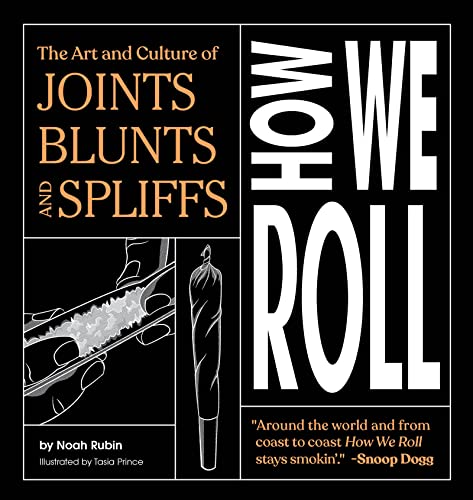
While Noah and I have both moved on from Merry Jane, he’s kept his THC ties fully ablaze and just dropped a marijuana magnum opus. His book How We Roll: The Art and Culture of Joints, Blunts, and Spliffs, out now via Chronicle Books, is required reading for seasoned tokers and the cannabis curious alike. It may very well be the first in-depth text that explores one of the most foundational aspects of weed culture (CONSUMPTION methods!), and it elegantly mixes tutorials and history alongside interviews, epic stories from iconic smokers like Snoop and Tommy Chong, do’s and don’ts, illustrated guides, and much, much more.
I’m proud of my boy, and not surprised that the text is flying off shelves and making waves in the world of printed matter. Noah is also promoting How We Roll in a nuanced way by offering rolling tutorials at music festivals across the country, on top of pop-ups and activations at weed-friendly establishments that aren’t distinctly plant-touching. Places like Morgenstern’s Ice Cream in New York, where he’ll be celebrating the book on November 4th, 5th, and 6th in an event co-presented by WeedFeed. Come say hey and smoke one if you’re in town!
To ring in this milestone for my bud, we thought it was time to give Noah the Cash Only treatment—and man did he come correct. Below, we discuss squirreling homegrown weed from Cantor Bob, some of the more exotic locales where Noah has sparked one up, and why it’s time to finally get Joe Biden high.
Much love and big ups, Noah! See you at the trippy tree.
Courtesy of Chronicle Books
What was your first time smoking weed like? Were you in Sherborn, our hometown?
Noah Rubin: So it’s funny that you ask about Sherborn, because that’s definitely where my first memories of smoking weed are from. As you know, being a Jew in semi-rural Massachusetts is a bit of a rarity, but one of my best friend’s growing up, Ori, and her family were deeply involved in the Jewish community out there. Her father Bob was actually a cantor in the temple a few towns away. For the uninitiated, a cantor is almost on the level of the rabbi; he sings all the prayers in the temple etcetera. So I would go to their house for sabbath dinner on occasion and we would notice that after knocking out the prayers, Cantor Bob would disappear for a bit. He’d come back with bloodshot eyes, smelling kind of funny, and in an extra good mood. As we got older, we started to put one and one together, and realized that Cantor Bob was actually a stoner on the low.
Once we realized that, we started sniffing around until one day Ori came to school and let us know that she was in her mom’s garden and noticed that there was a plant that looked an awful lot like a weed plant. That, of course, got us plotting how we could get some. We sort of started whispering about that, and I think the parents overheard us. Before we knew it, the plant disappeared from the garden.
It was a smart defensive move on the adults’ part, but it tipped us off that Cantor Bob had harvested it and stashed it somewhere in the house. It didn’t take Ori too long to figure out where the stash was—and that became the first time we had access to a steady supply of weed.
And the weed was honestly amazing. Cantor Bob also brewed his own beer at that time, which was always fermenting in the basement and there was more of it than he could drink. Needless to say, my parents were wondering why I was so interested in going over to their house for sabbath dinner all the time. Even though Ori’s mom was an incredible chef, it definitely was Cantor Bob’s beer and bud combo that kept us coming back for more. We’d eat an amazing dinner, then steal our party favors and chill on the couch on the second floor of their garage. I remember those as some sacred evenings on multiple levels.
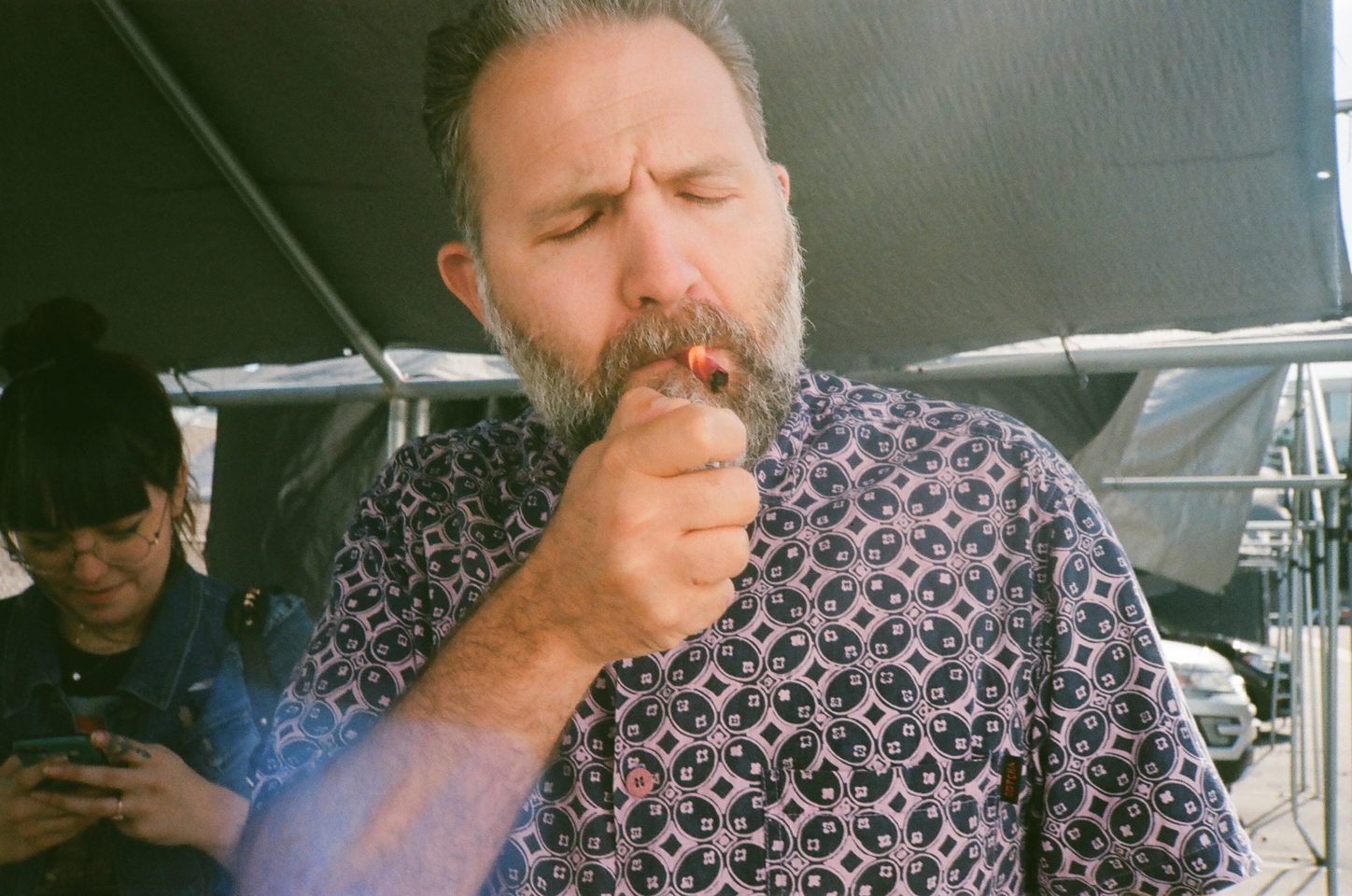
Photo by Zach Sokol
Your book opens with a great anecdote about scoring nug in mainland China. What are some other foreign locales you’ve lit one up in? Any memorable weed/travel stories that didn’t make it into the book?
Definitely. My parents were actually quite chill when I was a kid, so I didn’t have a lot of rules. So when I asked if I could go on a solo trip to Europe at the age of 15 with a friend of mine who was a couple years older, they said yes without much hesitation. And you’ve got to remember this was before cell phones or anything, so they were basically letting me go to Europe alone for three weeks at the age of 15 with the understanding that they weren’t going to hear from me for that entire time.
Of course, me and my buddy Geoff who I went with immediately routed the trip through Amsterdam. We got there after a couple days in Germany and the first thing we did was hit up a coffee shop where it was a weed cornucopia like nothing I had ever seen. I remember we bought this really amazing black Nepalese hash and proceeded to roll it up in a spliff and get really blazed. I think we also bought some “space cakes,” which was more than we should have taken all at once. The next thing I remember, I was sitting cross-legged on the floor in the Salvador Dali Museum, looking at a painting from like six inches away. I was so high off my ass that I literally didn’t know where I was.
Fortunately, after a couple hours, I got my head straight and had something to eat and we started drinking beers in the red light district. I spent the rest of the night chit-chatting with ladies of the night, probably annoying them as a weird 15-year-old kid who had never really experienced anything before.
While working onHow We Roll, did you discover anything surprising about your own relationship with weed? For example, did you realize you were better or more knowledgeable about X than you previously thought? Did you find any gaps in your cannabis education or consumption skill sets that you had to bone up on?
Working on How We Roll definitely reminded me of all the amazing people in my life that I have smoked weed with from around the world. I never even thought about that before, but all of these relationships that I’ve had for many years and cherished had some component of smoking weed as a recurring theme. I was really happy that the book pushed me to examine that part of my own personal relationships, as well as just read up on as much material as I could find about rolling and weed history.
Not only did I brush up my general knowledge, I also had to roll a ton of joints. I forced myself to roll every joint I wrote about in the book until it was really good. That gave me a good basic vocabulary of different things to roll and I am pretty grateful for that in hindsight.
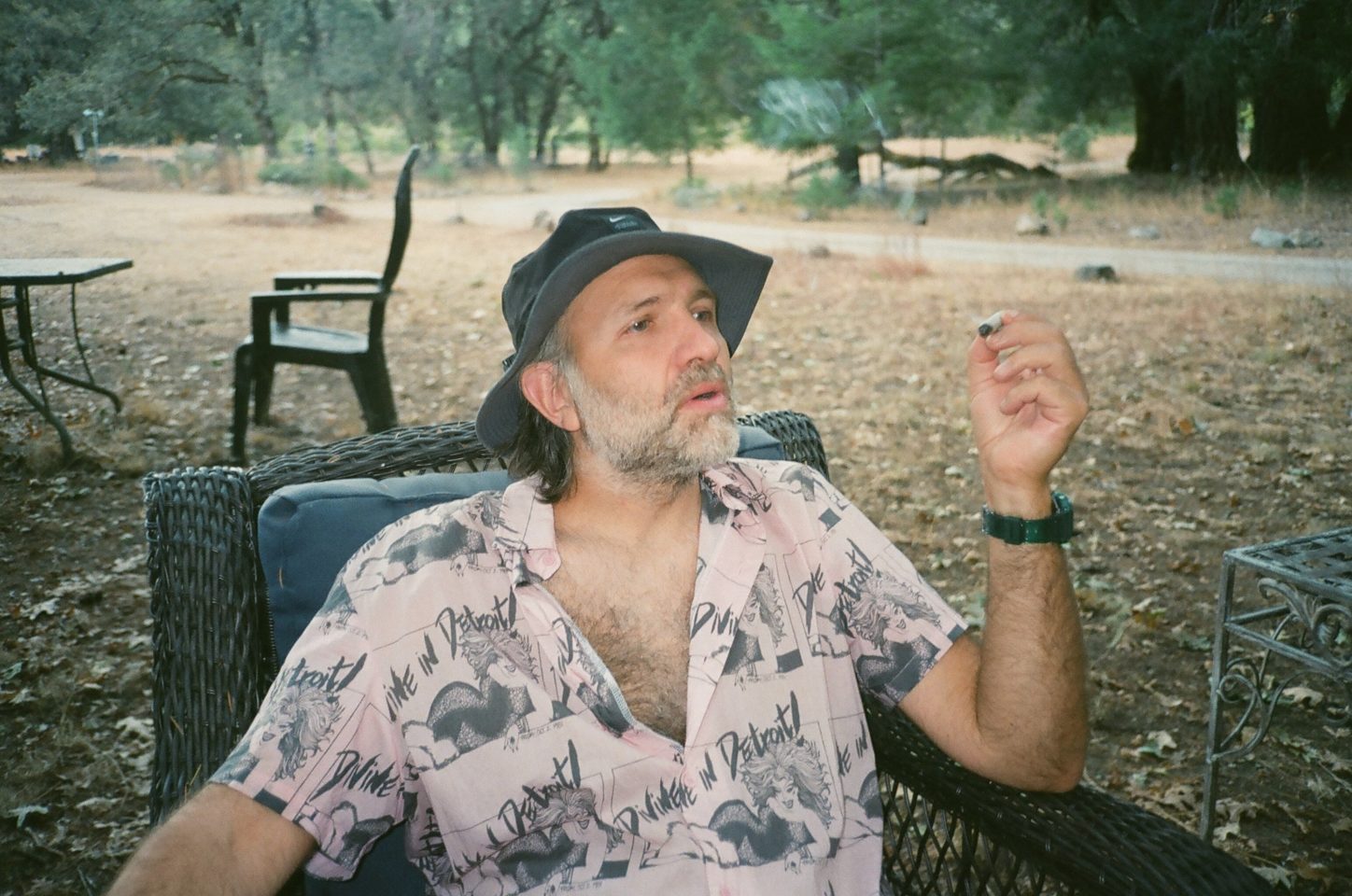
Photo by Zach Sokol
Do you have a favorite quote, tip, or particular illustration from the book?
I would just say overall that I’m super happy with how the illustrations came out. I’m extremely grateful to my illustrator Tasia Prince for hitting such a home run with the artwork. Tasia and I go back as collaborators to when she was an intern at Mass Appeal and I was editor-in-chief of the mag over there. She would always show me these dope little drawings she was working on and I was always impressed. Now she’s a big-time tech executive, but her art skills are super on point, so collaborating with her on this project was an extension of this relationship that has meant a lot to me over the years.
In terms of my favorite quote, I think that the story that Tommy Chong told about being in the room with a stinky ass joint alongside John Lennon and Rod Stewart still slaps, even though I’ve heard it several times before. And speaking of quotes, I got to say I’m really appreciative to the Anthony Bourdain estate for letting me clear his iconic quote about wiping your ass and omelettes and the importance of rolling a joint—shout out to my boy Nick Morgenstern for connecting the dots on that one.
If you could get the book into any living person’s hands, who would you want to read it?
I guess now that President Biden is trying to be down with the weed, I think someone on his team should put him on to my book so he can get a basic grasp of where a lot of this shit comes from and the culture behind it. If anyone out there can make it happen, please holler at me.
Photo by Zach Sokol
Do you have a current favorite weed strain? How do you like to consume it? (Bong, joint, etc.)
My old friend Luca at Biscotti just hit me with his line of flower, and it’s pretty fire. Even though Biscotti really made a name for themselves with premium hash, they’re definitely coming correct with this new product. I smoked the Sugar Biscuits strain the other night in a big fat joint then crushed some Thai food at Ruen Pair in L.A. I gotta say it was an amazing combo.
Also, just for the record, even though I’m the guy that just wrote a book about joints, I am a big fan of bongs in general, as well. I always keep my handy bong, Mr. Pink, on deck when I need a late night rip.
Do you have any favorite weed products—any particular papers, grinders, or whatever?
The beautiful thing about being a California resident is that we have a lot of amazing product innovations here… like shit I would never have dreamed of as a young weed smoker. One product I want to shout out in particular is the Pure Beauty “menthol cannabis cigarettes.” Definitely not a product for the purists out there, but an amazing overall experience for someone like myself who wants to have a menthol ciggy on the low once in a while. Definitely scratches that itch like none other. I also want to give a shout-out to Krush grinders cause I think they make a really beautifully-engineered product. And then in the world of edibles, I think Harmony’s Malus infused cider is top notch. Super dry and delicious with a good THC kick.
Photo by Zach Sokol
Lately, what activity do you like to do after you’ve gotten stoned?
I’ve been a big fan of smoking weed and doing outdoor activities for a long time. Back in the day, I would roll with a crew of folks all over New York City on our bikes. We would pick destinations 10 or 15 miles from Manhattan and ride out there and smoke a few big blunts and then find something amazing to eat, like L&B Spumoni Gardens. That kind of defined an era for me and we had a lot of great times together. Now that I’m in L.A., if I have the opportunity to smoke a joint and go hiking in Griffith Park or basically anywhere else, I will definitely do that.
Can you recommend something to watch while baked?
Since you’re a cat guy, I’m guessing you might be up on this video game called Stray—it’s a super chill and interesting video game. Basically Stray imagines a post-apocalyptic world in which you’re a cat adventuring through an abandoned city. The music is amazing and even though there are some hectic moments in the game, it’s a super zen and exploratory experience overall. I highly recommend checking it out.
Photo by Zach Sokol
Currently, what do you like to listen to after smoking?
The Jamaican artist Protoje just dropped his new album called Third Time’s the Charm. It’s a great example of an artist taking classic roots ideas and updating them in an interesting way, while still staying true to a core reggae aesthetic.
Also gotta give some props to my man Ev Bird who just dropped his debut EP Puff Piece on Royal Mountain Records. He’s a young indie artist with a genius instinct for writing chill tunes. I connected him with Boldy James for a song called “The Ring,” which has been doing well. Definitely check that one out, too.
Can you recommend something to read after smoking besides your own book?
Who’s in your dream blunt rotation? Dead or alive.
I honestly feel so blessed by the amazing people I have had the opportunity to smoke weed with. It’s kind of crazy when I think about it. In terms of people I haven’t smoked with that might be in my dream rotation, I guess I got to go back to politics, cause I think it’s time we get Joe Biden high. And maybe let’s invite Obama, ‘cause I bet he’s got some solid rolling skills. And I’m even down to get some maverick Republicans in the rotation, too. We all gotta start smoking weed together cause this is an amazing country that needs to do more in leading the world to be a better place than it is right now.
You’ve been doing some nuanced promotion for the book release, including events and classes you’re teaching at music festivals, as well as pop-ups at stores that have nothing to do with weed. Can you tell me about this approach to getting the word out and what else is on the horizon?
I like bringing some of the message to people in non-conventional ways—food, music, and art are things that I’ve always closely associated with my love of weed.
On that note, I’m looking forward to the upcoming How We Roll event with Morgenstern‘s Ice Cream in NYC, in collaboration with WeedFeed. It’s going to be a three-day event—November 4th, 5th, and 6th—celebrating rolling culture alongside one of my favorite things besides weed: ice cream. Nick Morgenstern, the brains behind the operation, collaborated with me to develop an incredible variety of sundaes that people will be able to experience. It’s a whole different way to help bring to life some of the regional vibes that I explore in my book.
President Joe Biden announced on Oct. 6 that he would be pardoning people across the country who currently have cannabis convictions on their record. According to the official White House press release, this means the pardon covers “…all current United States citizens and lawful permanent residents who committed the offense of simple possession of marijuana in violation of the Controlled Substances Act…”
The statement also made it clear that only “simple” convictions would be pardoned. “My intent by this proclamation is to pardon only the offense of simple possession of marijuana in violation of Federal law or in violation of D.C. Code 48–904.01(d)(1), and not any other offenses related to marijuana or other controlled substances,” Biden said.
Since the announcement was made, there has been no further announcements about the number of people who are to be pardoned, or their names. However, estimates provided by the U.S. Sentencing Commission provides insight into how many people could potentially receive a pardon.
Founded in 1984, the U.S. Sentencing Commission was created “to reduce sentencing disparities and promote transparency and proportionality in sentencing.” As an independent agency, its purpose is to collect and analyze data in regard to information related to federal sentences, and creates guidelines for crime policy in multiple branches of government.
In a report published on Oct. 13, the commission shows a chart featuring “The number of federal offenders convicted only of 21 U.S.C. § 844 Involving Marijuana” which covers the range of years between 1992-2021. An analysis of each year breaks down the number of U.S. citizen offenders, with a total of 6,577. The report notes that no offenders are in Federal Bureau of Prisons (BOP), as of Jan. 29, 2022.
In a total of all of these offenders who have at least one count of simple possession (as defined by 21 U.S.C. 844) 78.5% of offenders were male, and 21.6% were female. In regards to race, 41.3% were White, 31.8% “Hispanic,” 23.6% Black, and 3.3% Other.
Another chart shows that offenders with convictions “Involving Marijuana and Other Drugs” includes a total of 415 people within the same time frame, and an additional chart shows 555 offenders “Involving only marijuana who also have other convictions.”
A breakdown of each Court of Appeals Circuit and its respective jurisdiction shows that the highest percent of regional offenders came from “Virginia East” at 9.7% (covering courts in Maryland, North Carolina, Virginia, and West Virginia), “Texas West” at 8.8% (covering courts in Louisiana, Mississippi, and Texas), “Arizona” at 16.7% and “California South” at 15% (both of which are included in United States Court of Appeals for the Ninth Circuit, which includes courts in Alaska, Arizona, California, Hawaii, Idaho, Montana, Nevada, Oregon, and Washington State). All other district percentages range from 0.1% to 4.3%.
Many states have already created programs to assist residents in expunging, vacating, or sealing cannabis convictions. According to Reuters, these efforts have helped over 2 million people clear their records.
Biden’s initial pardon announcement urged state governors to issue pardons as well. Most recently though, Indiana Gov. Eric Holcomb stated that he would not be pardoning anyone for cannabis convictions, and instead recommended that people seeking expungement use state programs that are already in place.
Cannabis remains a hot button issue with politically-driven fanfare in the U.S. territory of the Virgin Islands. Two bills were introduced in the Virgin Islands on Oct. 24: One that would legalize cannabis for adult use and another that would expunge eligible cases of cannabis convictions.
Bill No. 21-0160 would legalize cannabis for adults 21 and over, and Bill No. 21-0137 would pave a way to expunge eligible cannabis convictions. After at least two previous attempts, government officials continue to push forward a workable bill.
Both bills were sponsored by Sen. Janelle Sarauw, who has been working on cannabis reform for some time. “It has been a very cumbersome process to get these bills to where they are today,” she wrote in a press release, which she also posted on Facebook, referring to past promises to get legislation going on the islands.
“Although there have been many politically driven false narratives about this cannabis legislation, I am proud of the work done to ensure that locals and minorities are not locked out of the industry and have an opportunity to participate in the economic potential of the industry — from farming, to dispensaries, to incentives for boutique labs, and micro energy providers,” Sarauw wrote.
“To ignore those lessons would be foolish,” Sarauw continued. “As a political scientist, but most importantly as an elected representative of the people, it is my job to do the due diligence to protect the masses and the best interest of our residents by creating equity in opportunity.”
The 69-page legalization bill covers just about any provision that you’d expect in a U.S. state bill. Under the legalization bill, an Office of Cannabis Regulation (OCR) would issue business licenses, oversee the industry, and set rules on advertising, packaging, and labeling. Edibles would be capped at 100 mg THC with 10 mg doses. Licensing fees would be imposed and a potential 50 cent per gram tax would be imposed on cultivators who sell cannabis to other licensees. The bill would include several equity components.
Under the expungement bill, people with past cannabis convictions can petition the courts to clear convictions for violations of up to two ounces of cannabis.
On Aug. 10, the V.I. Cannabis Advisory Board (VICAB) in the U.S. Virgin Islands unanimously approved draft regulations for the territory’s medical cannabis program. On Aug. 12, the Office of Cannabis Regulations posted the draft publicly. Long story short, the timeline didn’t adhere very well. Gov. Bryan’s administration was blamed by Sen. Sarauw for delaying the rollout of medical cannabis earlier on the islands.
Virgin Islands Governor Albert Bryan Jr. proposed an earlier version of the Cannabis Use Act in 2019, and introduced another version in 2020. Recently, Bryan’s re-election campaign fired back and slammed Sen. Sarauw for failing to fulfill promises to legalize cannabis, which she said in 2021. But it was the pressure put on by the governor that may have contributed to Sen. Sarauw’s recent actions to release the new pieces of legislation.
Sen. Sarauw herself and fellow candidate Sen. Kurt Vialet, who is against cannabis legalization, are both running to de-seat Gov. Bryan and Lt. Gov. Tregenza Roach in the upcoming election on November 8.
The Virgin Islands is a hotbed for Caribbean music like reggae, so it’s safe to say a lot of tourists go there to smoke. But despite an active medical cannabis program, tourists are warned that public consumption of cannabis is still forbidden in the Virgin Islands. Even with a medical cannabis card, you can not smoke weed in any public space.
According to UMass Memorial Medical Center, 27-year-old Kai Chen and his 63-year-old mother Kam Look were poisoned from eating mushrooms, known as “death caps,” which they found growing near their home a few weeks ago in Amherst, Massachusetts.
The two survived, and one of their doctors recently told the Boston Globe it was thanks to the help of Legalon, an experimental drug flown in from Philadelphia made from an extract of the milk thistle plant. Kam did, however, require a liver transplant and the two suffered kidney damage as well.
“The treatment involved getting special permission from the FDA to provide an antidote that’s currently an investigational drug – and then to get that antidote emergently cured from Philadelphia” said Dr. Stephanie Carreiro, from the Division of Toxicology at UMass Memorial Medical Center in a press conference. “We had tried many methods to try to remove the toxin from their bodies. And ultimately, for Kam, it also required liver transplantation.”
Death caps, known amongst nerds as Amanita phalloides, are a mushroom that grow pervasively throughout California and most of the world. According to Mushrooms of the Redwood Coast by Noah Siegel and Christian Schwarz, the mushrooms are all white from top to bottom and commonly grow on wood chips but can be found more or less anywhere in North America. The fatality rate for those who consume death caps varies depending on the source from 25 to 50%.
Death caps and a handful of other particularly prolific and toxic species of mushrooms cause fatalities in people who ingest them every year, largely because the symptoms do not set in immediately after consuming. By the time people seek help, it is often too late and the liver damage has already begun. Kai Chen did, however, tell CBS Boston that they felt something was off pretty quickly.
“This should be a very big cautionary tale,” Kai Chen said in a press conference. “Be careful of what you find out there in the woods, especially mushrooms.”
Levon Durr, owner of a mushroom cultivation business called Fungaia Farms in Eureka, CA, told High Times that death caps have actually just as of this year been recorded in places they have otherwise not yet been found, which could indicate climate change has allowed them to gain more ground, so to speak.
“Amanita phalloides (death cap) has officially been recorded in Humboldt County last year and seems to have been migrating north over the last decade. They have been recorded in the Bay Area for years now and then became more common in Mendocino County and now Humboldt,” Durr said. “The theory is the warming, drying climate has opened up new habitats for them to move north. So, it begs to hypothesize we will, unfortunately, see more poisonings as it expands its habitat into areas where people are less familiar with the death cap.”
Mushroom foraging season is upon us and despite all the most grim warnings I can think of, people will still inevitably go out and mistake one thing for another every year. Mushroom experts have collectively warned the community at large for decades that proper mushroom identification is extremely difficult and requires much more extensive legwork than simple photo comparison. For instance, one of the most commonly hunted psychedelic mushrooms known as “Wavy caps” (Psilocybe cyanescens) have a deadly look-alike called Galerina marginata that oftentimes are virtually impossible to distinguish between without proper training.
“When collecting wild mushrooms for food, one rule supersedes all others. When in doubt, throw it out. If you are not sure that your mushroom is edible, don’t eat it.” – Excerpt from Mushrooms of the Redwood Coast.
I just wanted to share a pic of me taking an edible with my mom before we watch Death Becomes Her.
Devil Wears Prada is better.
Are you out of your mind? Goldie Hawn, Isabella Rossellini, Bruce Willis… meanwhile Adrian Grenier’s character suuuuuucks.
The cerulean scene is iconic.
True, but that’s it.
And when Meryl Streep says, “Why is no one readddddy?”
Death Becomes Her is about America’s obsession with external validation, and how it destroys us. DWPrada is about how external validation will make you a global success!
Why do you hate America?
I didn’t say that.
You inferred it.
Yes, please explain to me what I meant like you’re explaining weed to me – BTW I own my own company.
For someone who hates DWPrada you sound a lot like Miranda Presley.
You don’t even know me. I cannot wait for this edible to kick in so I can chill the f out.
I always take fast acting.
CoOoOoool.
I was just trying to help. We want the same thing, a successful industry with fair-access for all.
I want that, but you sound like a whining Bruce Willis in Death Becomes Her.
I was just trying to have a conversation about cannabis classification, not argue about 90’s movies.
I don’t want to do either. Everyone like you in our industry loves to focus on short-term details instead long-term goals.
Short-term details create long-term goals.
Sure, but when you do nothing but argue about the small stuff you can’t achieve the big ideas.
This is going nowhere. I was just trying to help. Bye.
“You should not compete with me. I always win.” – Meryl Streep as Madeline Ashton in Death Becomes Her, the better movie.
The Next Day
INSTAGRAM POST 10:31am
@CANNALOVERRRR posts a picture of their flourishing home grow.
Caption: My babies are growing up so fast!
Comments
@420ForLyfe: WOW. Coming at me for saying Indica, and you’re dumb enough to post your home grow!
@Cannaloverrrr: Sounds like you need more sleep.
Hope you have a gun.
I don’t, why?
$2000 in equip and plants. Home grows get robbed all the time.
Never even shot a gun.
Ok, Elitist.
Home grow is crucial as we fight for decrim.
They also endanger neighborhoods, and destroy the climate. Look. It. Up.
Are you saying home grow is bad?
I’m saying you should support small farms – regulated, quality controlled, and good for the economy.
As a med patient on a fixed income I need to grow my own.
That’s why we must fight to change tax regs.
Re: quality control, I’ve been growing for six years and know what I’m doing.
I’d never give my mom your unregulated closet weed.
Your mom aint getting none. BTW nothing good is getting done while we fight with each other on here.
I’m just sayin’ buy a gun.
Let me guess, if we all had guns no one would use them?
Not only that, but if we think beyond guns and focus on new tech we can compete with China.
What new tech?
Laser eyes.
Laser eyes?
Especially at schools.
You want our teachers –
And kids to have laser eyes.
So no home grow, but everyone has laser eyes?
And, America corners the ancillary market of manufacturing and selling visors made out of ruby quartz so we can control our lasers.
Are you talking about Cyclops?
Yea that was a test to see if you like X-Men, and unlike you I wanna support small farms.
So do I.
When you make a frozen pizza do you still pay Dominos?
No.
That’s the same as not supporting small farms!
Agree to disagree.
Would you say we’re not seeing eye to laser eye?
I would.
Glad we agree on that.
Guess we’re making progress.
No we aren’t.
I was being sarcastic.
I’m joking. OMG you are dumb. I’m gonna Nightcrawler outta here. BAMF
TWO DAYS LATER
INSTAGRAM POST 9:01am
@HighTimesMagazine posts a picture of Brittney Griner’s drug conviction.
Caption: De-nied. A Russian court on Tuesday shut down #BrittneyGriner’s appeal
Comments
@420ForLyfe: She has to live with the consequences of her actions.
@Cannaloverrrr: No one should be in prison nine years on some carts.
In America, yes, but IT’S RUSSIA.
Biden should do everything he can to bring her home.
He’s not even doing everything he can to free all non-violent offenders in jail here.
He’s working on it.
You love Biden, Home Grow Boi.
“Let’s go Brandon!” – You (and your mom), probably.
Biden’s doing the bare minimum just for votes.
That’s how politics works.
He created the worst parts of the War on Drugs.
People change.
Sheeple follow.
It’s a start.
Anyway, Brittney fucked around and found out.
We need to fund MMJresearch for athletes.
It’s not celeb athletes that need help, it’s veterans.
It’s everyone.
Agree, but none of this will matter once Big Pharma comes in.
To combat that we need fair banking for small businesses.
First we need lab testing regs so people can’t fudge their THC numbers.
THC doesn’t matter. Terps do. It’s bad you don’t know that.
What’s bad is these rich, bad actors who steal shine from people actually doing the work.
Not to mention all these millionaires coming in who know nothing about the plant.
That’s because it’s an industry not a community.
It’s actually a community being ruined by industry.
It’s both but it dont matter cuz we’re circling the drain here arguing while people with lobbyist money make decisions without us.
Truth. How was Death Becomes Her?
We fell asleep watching a nature doc when the Indica (that’s right I said INDICA) edibles kicked in.
Watching nature docs high rocks.
It was about this snake in the Amazon rainforest that ran out of food because of deforestation, and ate its own tail.
Actually a snake can’t eat its own tail.
Is this you explaining Indica to me all over again?
Technically, eating means to chew, and snakes swallow their prey whole.
The most recent data available from the Washington State Liquor and Cannabis Board (LCB) shows that among all of the cannabis business owners in Seattle, Washington, only 4% are Black-owned. A new report from King5 News interviews minority business owners who lost their place in the industry when Washington State legalized adult-use cannabis, and how a Seattle task force is working on change.
Former cannabis business owners Peter Manning and Mike Asai recall what it was like living in Seattle decades ago. “I know that we use the War on Drugs to go after Black and Brown people,” entrepreneur and Seattle-native Peter Manning told King5. “You guys punish us for years for cannabis. And now it’s okay. Now you’re doing it. Now it’s okay.”
“Growing up in Seattle, in the ‘80s, [if you] just simply had a joint you would get five years in prison,” said Mike Asai, co-founder of the Emerald City Collective. “[I’ve] seen that happen with family and friends and acquaintances, you know, for just that.”
Washington State legalized medical cannabis in 1998, which led both Manning and Asai to pursue a role in the industry. In the 2000s, both of them joined a medical cannabis collective, which brought together growers and retailers in a way that was beneficial to the community.
“To be on the bad end, when it comes to cannabis and then revert to be on the good end was very empowering,” Asai said of the collective. “Because of growing up and just seeing the War on Drugs was really the war on African Americans, the war on Black men and Black women in this country.”
In 2015, the state legalized adult-use cannabis, which forced cannabis business owners to shut down their businesses and re-apply for a license—but many Black and Brown business owners were not able to secure one. “To be legitimate and then all of a sudden now being criminalized…It’s been very traumatizing,” said Asai. “It’s been very depressing and painful to see, especially to see all the money that’s been made since the last six years since we’ve been closed. I’ve had to figure things out. I had to do Uber for about a year, just to stay afloat.”
LCB data from 2021 shows that out of the state’s 558 available licenses, only 19 have been given to Black applicants. “There is zero African American ownership in the city of Seattle, and to be supposedly this progressive state, this liberal state, it’s not showing,” Manning said.
In recent years, both Manning and Asai have spoken with the press and attended city meetings to speak out about this injustice. Recently, they both attended a Seattle City Council meeting on July 20 as public commenters urging the council to address the issue.
The Social Equity in Cannabis Task Force was created in 2020 to establish a social equity program, and to issue and reissue retail licenses. It’s first set of recommendations were submitted on Jan. 6. 2022, with a deadline that a final report be submitted to the state legislature and governor by Dec. 9, 2022.
LCB Board Social Equity in Cannabis Task Force member Ollie Garret told King5 that change needs to happen now. “Yes. I mean…what’s the saying? A day late, and a dollar short. Now the community is screaming, ‘What about us? What about us?’ Garrett said. “We go, ‘Oh, we need to fix this.’”
Garret describes the situation as a “failure” and a “missed opportunity.” “Could it have been done different in the beginning? Yes. But this was a new industry. Who knew, who thought about inclusion and Blacks being left out,” Garret said.
According to King5, the Social Equity in Cannabis Task Force is setting aside 38 licenses for people of color. Unfortunately, over half of the licenses are for business locations in areas that currently ban cannabis. “Where we’re at right now, the LCB cannot move licenses out of the areas that they’re in or create new license[s] without legislation,” Garrett said. “We are going to introduce [that] in this upcoming session.”
Manning questions the task force’s view on equity. “What are you giving me?” Manning said. “A license that says I have the right to sell cannabis? But I can’t sell cannabis because I can’t open up in this location because it’s banned. How’s that equity?”
He also suggests that consumers be conscious about where they choose to buy their cannabis. “There’s white-owned stores in our Black neighborhoods,” Manning said. “Ten years ago, you were locking us up for the same thing. White people were making millions of dollars. You’re taking that money out of our community, and they’re putting it in the white community. We want our Black-owned stores in our communities.”
Idaho’s ban on CBD and hemp-derived products only harms animals even more, because people give it to them regardless of regulations, according to a national group devoted to the wellbeing of animals and pets.
It’s a complicated issue that oscillates between the urgent need for CBD oil for dogs and cats that have seizures and other issues, and the need to prove CBD is beneficial in those areas before making medical claims and eventually getting the blessing from the FDA.
Idaho is home to some of the least tolerant cannabis laws seen anywhere in the U.S. Only Idaho and a handful of other states have been resistant to allow even CBD sales. Last July, the Idaho State Department of Agriculture (ISDA) announced a ban on CBD products and other hemp-derived products intended for pets and farm animals, set to go into effect November 1.
“Idaho Code 25-2712 (1) states that it is unlawful to “manufacture or distribut[e] any commercial feed that is adulterated or misbranded.” Therefore, pursuant to state law and consistent with the FDA and AAFCO [Association of American Feed Control Officials (AAFCO)], the ISDA has not approved hemp or hemp-derived products for animal use,” Department officials wrote.
But members of the National Animal Supplement Council (NASC) believe that Idaho’s ban puts animals in even more danger because CBD products need certificates of analysis and need to be vetted under a regulatory program.
So the NASC called people to action on the Council’s website and launched a petition on Change.org. Nearly 3,000 people have signed the petition at the time of writing.
“The Idaho State Department of Agriculture intends to stop the sale of dosage form pet products (animal health supplements) that contain hemp and CBD, beginning on November 1, 2022,” the petition reads.
“This decision will likely harm animals whose owners will no longer be able to access the products their pets rely on for a variety of health and wellness reasons. It will also have a serious economic impact on Idaho businesses that manufacture and sell these products.
Removing CBD pet products from the marketplace paves the way for a black-market industry of unscrupulous suppliers selling questionable products that could end up harming animals. It may also lead to pet owners turning to human products that aren’t formulated for pets or marijuana products that contain high levels of THC.”
The NASC has a very specific twofold mission: “to promote the health and wellbeing of companion animals and horses that are given animal health supplements by their owners, and to protect and enhance the animal health supplement industry.”
Viral videos show CBD oil stopping seizures in dogs in real time.
Professional British Boxer Anthony Fowler, for instance, posted a video of a dog having a seizure and how fast CBD oil stopped the dog from shaking. Another viral video shows CBD oil stopping a seizure in another dog in less than one minute.
But despite these anecdotal reports coming out of the woodwork, other national organizations say there is not enough known to say CBD products are safe for pets.
Not everyone’s onboard, however, which includes the FDA. The Association of American Feed Control Officials (AAFCO) and several other organizations wrote a joint open letter earlier this year warning about health concerns regarding hemp and CBD in animal feeds and pet food.